
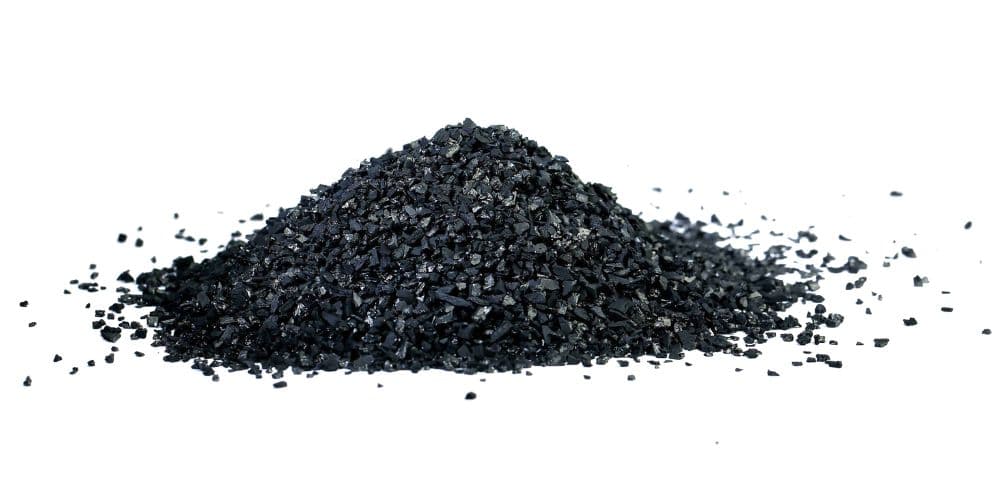
Activated Carbon
Fabricante y Proveedor de Exportación
Activated carbon manufacturer in Thailand — coconut shell and coal-based GAC, PAC, pelletized for water treatment, air purification and gold recovery.
Grados Disponibles
Opciones de Empaque
Descripción del Producto
Dusit Chemicals es un proveedor líder de carbón activado en Tailandia, exportando carbón activado a base de cáscara de coco y a base de carbón a empresas de agua, plantas industriales, minas de oro e instalaciones de tratamiento de aire en más de 40 países. Nuestros productos de carbón activado se fabrican con números de yodo de 600 a 1200+ mg/g, áreas superficiales de 900-1200 m²/g BET, y están disponibles en formas granular (GAC), en polvo (PAC) y en pellets. Como fabricante de carbón activado en Tailandia, nos beneficiamos de una abundante materia prima de cáscara de coco — Tailandia es uno de los mayores productores de coco del mundo — lo que nos da una ventaja de costos en los grados a base de cáscara de coco.
Activated Carbon Manufacturer Thailand — Coconut Shell GAC & Coal-Based PAC Exporter
Dusit Chemicals is a leading activated carbon manufacturer in Thailand, supplying coconut shell-based and coal-based activated carbon to water utilities, gold mining operations, and industrial facilities in 40+ countries. As an activated carbon manufacturer and exporter based in Thailand, we benefit from abundant local coconut shell feedstock — Thailand is one of the world's largest coconut producers — giving us a cost and supply chain advantage for coconut shell-based GAC with iodine numbers from 900 to 1200+ mg/g. Our activated carbon Thailand export covers GAC (granular, 8×30 and 12×40 mesh), PAC (powdered, <74μm), and pelletized forms from $700/MT FOB Bangkok. We supply full AWWA B600 iodine number test certification, methylene blue test, ash content, and bulk density data with every shipment. For water utilities, gold CIP/CIL circuits, and industrial wastewater treatment — Dusit Chemicals activated carbon from Thailand delivers consistent quality with fast 3–7 day transit to ASEAN and 14–21 day transit to Africa and the Middle East.
Activated Carbon Technical Specifications: Iodine Number, Mesh Size, and Feedstock Guide
Selecting the right activated carbon requires understanding these key technical parameters: (1) Iodine Number (mg/g): The primary measure of adsorption capacity for small molecules. Coconut shell GAC: 900–1200+ mg/g (iodine number correlates with micropore volume). Coal-based GAC: 600–900 mg/g. For drinking water treatment, specify iodine number ≥900 mg/g (AWWA B604). For gold CIP/CIL, specify ≥1000 mg/g. Test method: AWWA B600 or ASTM D4607. (2) Methylene Blue Number (mg/g): Measures mesopore adsorption capacity — critical for larger organic molecule removal (dyes, some pesticides). Typical range: 150–250 mg/g for coconut shell GAC. (3) BET Surface Area (m²/g): 900–1200 m²/g (coconut shell); 700–1000 m²/g (coal-based). Higher surface area generally correlates with higher adsorption capacity. (4) Mesh Size / Particle Size: 8×30 mesh (ASTM): 0.6–2.4 mm — for open gravity filter beds, rapid sand filter replacement. 12×40 mesh: 0.42–1.68 mm — for pressure vessels, enclosed contactors. 20×50 mesh: 0.3–0.85 mm — specialized applications. PAC (<74 μm): powdered form for dosing systems and emergency treatment. Pelletized (4 mm Ø): air and gas purification. (5) Ash Content: ≤5% for water treatment grades; lower is better. High ash reduces adsorption capacity and can affect taste and odor in potable water. (6) Moisture (as-packed): ≤5%. (7) Hardness/Abrasion Number: ≥80% (ASTM D3802) for coconut shell grades used in gold recovery — high hardness is critical to minimize fines generation in CIP/CIL circuits. (8) Bulk Density: 450–600 kg/m³ (coconut shell GAC), 500–650 kg/m³ (coal GAC). Used to calculate vessel sizing and container loading. Dusit Chemicals provides all of the above parameters on every Certificate of Analysis, with AWWA-compliant testing and optional SGS/Bureau Veritas third-party verification.
Activated Carbon Applications: Water Treatment, Gold Recovery, and Air Purification
Activated carbon is one of the most versatile industrial adsorbents, used across water treatment, gold mining, air purification, and pharmaceutical processes: (1) Municipal Drinking Water Treatment: GAC filters remove chlorine, taste, odor, disinfection by-products (DBPs like THMs), pesticides, herbicides, and emerging contaminants including PFAS ("forever chemicals"). Standard specification: coconut shell GAC, iodine ≥900 mg/g, 8×30 or 12×40 mesh, NSF/ANSI 42 or 61 certified for potable water contact. Empty Bed Contact Time (EBCT): 10–20 minutes typical for municipal plants. Carbon bed life: 18–36 months before breakthrough and replacement. (2) Industrial Wastewater Treatment: Coal-based GAC is preferred for removing high-molecular-weight organics — COD reduction, decolorization of textile effluent, removal of phenols, cyanide, and heavy metals. PAC is used as a supplement in activated sludge systems (PACT process) at 50–200 mg/L dosing. (3) Gold Recovery — CIP/CIL Process: Coconut shell GAC with high hardness (≥90% ASTM abrasion) and high iodine number (≥1000 mg/g) is the adsorbent of choice for carbon-in-pulp (CIP) and carbon-in-leach (CIL) gold extraction circuits. The activated carbon adsorbs the gold-cyanide complex from pregnant leach solution, then undergoes elution (stripping) and electrowinning to recover gold. Gold mines typically require 100–500 MT of activated carbon per year depending on throughput. (4) Air Purification & VOC Control: Pelletized activated carbon (4 mm diameter) is used in fixed-bed adsorbers for volatile organic compound (VOC) abatement in chemical plants, solvent recovery systems, and industrial ventilation. Also used in air filters for hydrogen sulfide (H₂S), ammonia, and mercury vapor removal. (5) Pharmaceutical & Food Processing: High-purity coconut shell PAC is used for decolorization of pharmaceutical intermediates, sugar refining (color removal), and water purification in beverage production. (6) Aquaculture & Fish Farming: Granular activated carbon removes chlorine, chloramines, organic toxins, and dissolved ammonia from recirculating aquaculture systems (RAS) and pond water. Dusit Chemicals can advise on grade selection and dosing calculations for all of the above applications.
Coconut Shell vs Coal-Based Activated Carbon: Complete Comparison for Buyers
The two dominant feedstocks for activated carbon — coconut shell and coal — produce carbons with different pore structures, performance characteristics, and best-use applications. Understanding the difference helps buyers specify the right grade and avoid overpaying for unnecessary performance. Coconut Shell Activated Carbon: Feedstock: dried coconut shell (endocarp), abundant in Thailand, Philippines, Indonesia, India, and Sri Lanka. Pore Structure: predominantly microporous (pore diameter <2 nm), resulting in high iodine numbers (900–1200+ mg/g) and high adsorption capacity for small molecules — chlorine (0.27 nm), taste/odor compounds like geosmin and MIB, VOCs, and gold-cyanide complexes. Physical Properties: high hardness (abrasion resistance ≥90%), low ash content (≤3%), low attrition — ideal for regeneration cycles in gold CIP/CIL. Applications: municipal drinking water (chlorine, taste, odor removal), gold recovery (CIP/CIL), pharmaceutical decolorization, point-of-use water filters. Price: $1,200–$2,200/MT FOB Bangkok (varies by iodine number). Coal-Based Activated Carbon: Feedstock: bituminous coal or lignite. Pore Structure: mixed micro/mesoporous (pore diameter 2–50 nm), with more mesopores than coconut shell — better for adsorbing larger organic molecules (dyes, COD, pesticides). Applications: industrial wastewater treatment (color/COD removal from textile and chemical effluent), air purification (larger VOC molecules), PAC for enhanced primary/secondary wastewater treatment. Lower hardness than coconut shell — less suitable for regeneration-dependent processes. Price: $800–$1,200/MT FOB Bangkok — lower cost makes it economical for high-volume industrial applications where regeneration is not required. Key Recommendation: For drinking water and gold recovery — always specify coconut shell. For industrial wastewater treatment and bulk air purification — coal-based provides sufficient performance at lower cost. Dusit Chemicals supplies both grades and can provide comparative test data (iodine number, methylene blue, BET surface area, hardness) to support your grade selection decision.
Importing Activated Carbon from Thailand: HS Codes, Duties, and Export Documentation
Thailand is one of the world's leading producers and exporters of coconut shell activated carbon, with competitive pricing and abundant coconut shell feedstock. Here is what international buyers need to know about importing activated carbon from Thailand: HS Code: Activated carbon is classified under HS 3802.10 (Activated Carbon) in most countries. Some jurisdictions classify coconut shell-based carbon under 3802.10 and coal-based under a separate heading — verify with your customs broker. Import Duties by Region: ASEAN buyers (Indonesia, Vietnam, Malaysia, Philippines, Myanmar, Cambodia, Laos, Brunei): 0% under ASEAN Free Trade Area (AFTA) with Form D Certificate of Origin from Thailand. India: Basic Customs Duty 7.5% (verify current AIFTA preferential rate under ASEAN-India FTA), IGST 18%. EU: 3.7% MFN import duty. USA: 3.7% MFN; verify if GSP (Generalized System of Preferences) or Section 301 tariffs apply. Nigeria: 5% import duty (HS 3802.10). Kenya/East Africa: 0–25% EAC Common External Tariff (CET) — verify current rate. Logistics from Thailand: Laem Chabang port offers regular container services to all major import markets. ASEAN: 3–7 days; South Asia: 7–14 days; Middle East: 10–15 days; East Africa: 14–21 days; West Africa: 18–25 days; Europe: 20–30 days. Documentation: Commercial Invoice, Packing List, Bill of Lading, Certificate of Origin (Form D for ASEAN/AIFTA), Certificate of Analysis (iodine number per AWWA B600/B604, methylene blue, ash, moisture, bulk density, hardness), SDS (GHS-compliant), NSF/ANSI 61 certification where required for potable water applications. MOQ: 1 MT LCL (40 × 25 kg bags) or 18–20 MT FCL. Contact our export team for pricing and documentation tailored to your country and application.
Activated Carbon Iodine Number & Mesh Size — How to Specify Your Order
Activated carbon performance is determined by two primary specifications: iodine number (micropore adsorption capacity for liquid-phase applications) and mesh size (particle size distribution for flow, pressure drop, and contact time). Ordering activated carbon without specifying both parameters often results in receiving a product that technically meets the product name but fails in your application. Dusit Chemicals supplies activated carbon from Thailand with full specification sheets — here is how to read and specify them correctly. **Iodine Number (mg/g):** The iodine number measures the ability of activated carbon to adsorb small molecules from liquid phase. It is the most widely used single-parameter quality indicator for liquid-phase activated carbon. Typical iodine numbers and their applications: - 500–700 mg/g: Low-grade, basic decolorization and odor removal in sugar, oil, and wastewater - 800–900 mg/g: Standard water treatment and food/beverage decolorization (most common grade) - 900–1,000 mg/g: High-performance drinking water treatment, pharmaceutical decolorization - >1,050 mg/g: Premium grade, gold recovery, solvent recovery, demanding pharmaceutical applications **BET Surface Area:** Directly correlated with adsorption capacity across all molecular sizes. Typical range: 800–1,200 m²/g for standard grades; 1,200–1,500 m²/g for premium grades. **Mesh Size (Granular AC):** Controls flow resistance, contact time, and suitability for fixed-bed columns. - 8×16 mesh (1.19–2.38 mm): Large granules, low pressure drop — suitable for large-scale water treatment columns - 12×40 mesh (0.42–1.68 mm): Medium granules — standard for municipal water treatment, gold recovery - 20×50 mesh (0.30–0.84 mm): Fine granules — short contact time applications, high surface exposure **Powdered AC (PAC):** <0.18 mm (<80 mesh) — for direct dosing into water/wastewater streams, emergency taste and odor events, batch treatment.
| Iodine Number | BET Surface Area | Typical Application | Grade |
|---|---|---|---|
| 500–700 mg/g | 700–900 m²/g | Basic decolorization, wastewater pre-treatment | Economy |
| 800–900 mg/g | 900–1,100 m²/g | Water treatment, food & beverage decolorization | Standard |
| 900–1,000 mg/g | 1,000–1,200 m²/g | Drinking water, pharmaceutical decolorization | Premium |
| >1,050 mg/g | >1,200 m²/g | Gold recovery, solvent recovery, high-spec pharma | Ultra-premium |
Aplicaciones Típicas
Especificaciones Técnicas
| Parámetro | Especificación |
|---|---|
| Apariencia | Gránulos o polvo negros |
| Número de yodo | ≥900 mg/g (GAC) |
| Superficie (BET) | 900–1200 m²/g |
| Humedad | ≤5% |
| Contenido de cenizas | ≤5% |
* Las especificaciones son valores típicos. La especificación final se confirma mediante COA por lote. Contáctenos para grados personalizados.
Empaque Disponible
Documentación Disponible
Solicite documentación a través de nuestro formulario de cotización o directamente por correo electrónico.
Preguntas Frecuentes
¿Para qué se utiliza Activated Carbon?›
¿Qué grados de Activated Carbon están disponibles?›
¿Cuál es la cantidad mínima de pedido (MOQ) para Activated Carbon?›
¿Qué documentación se incluye con Activated Carbon?›
¿Qué empaque está disponible para Activated Carbon?›
Por Qué Comprarnos
Related Resources & Products
Explore related guides, products, and applications from Dusit Chemicals.
Solicitar una Cotización
Obtenga precios para Activated Carbon — especifique cantidad, grado y destino.
Más en Químicos para tratamiento de agua
Guía de Precios de Exportación de Activated Carbon
Precios FOB — contáctenos para cotizaciones exactas actuales.
| Grado | Rango de Precio | Notas |
|---|---|---|
| Coconut Shell GAC (Iodine 900+) | $1,200-$1,800/MT | Drinking water, gold recovery |
| Coconut Shell GAC (Iodine 1100+) | $1,600-$2,200/MT | Premium water, pharma |
| Coal-based GAC | $800-$1,200/MT | Industrial WTP, air treatment |
| PAC (Powdered) | $700-$1,100/MT | Dosing systems, emergency treatment |