
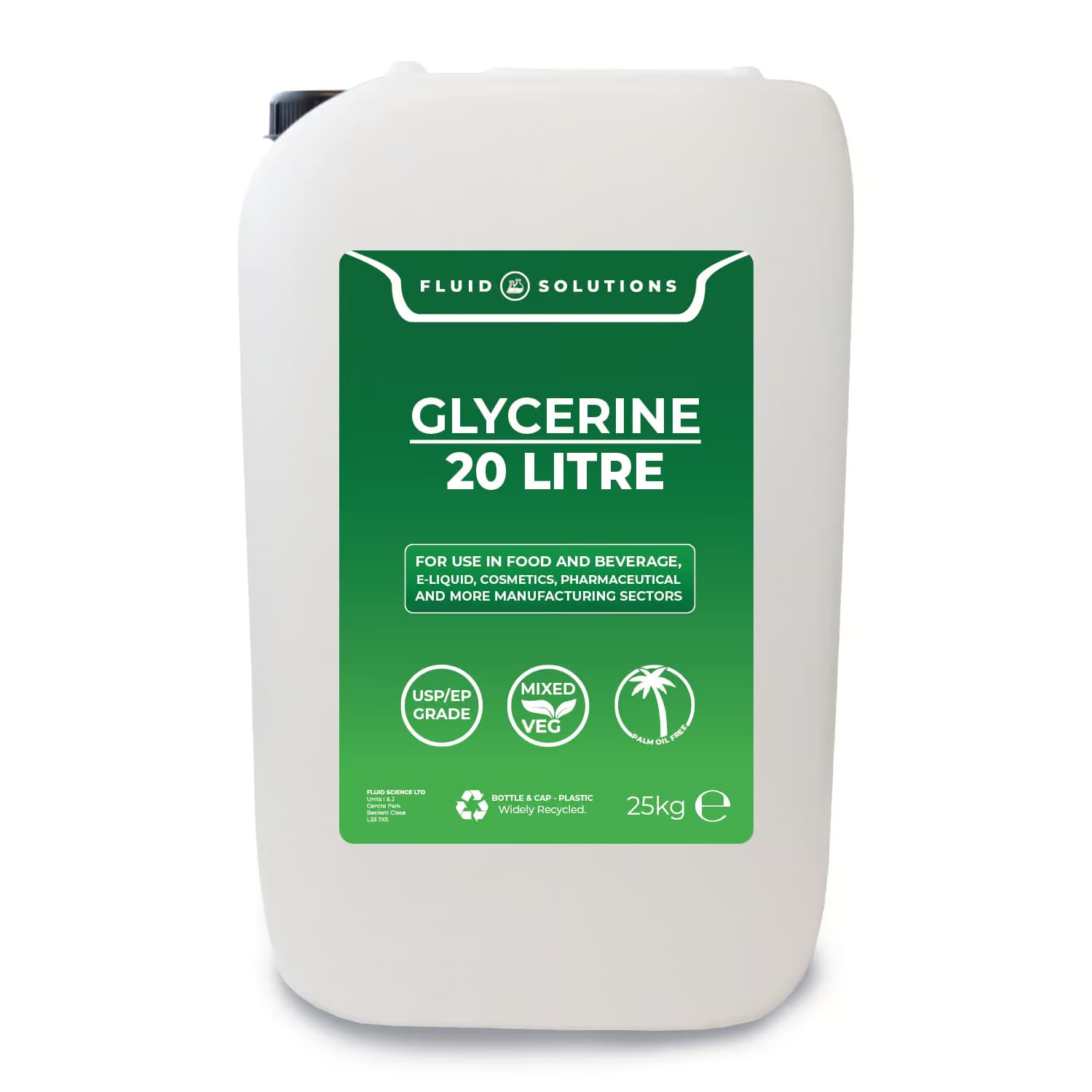
Glycerin (Glycerol)
Fabricante y Proveedor de Exportación
Refined glycerin supplier Thailand — 99.5%+ USP/BP/FCC glycerol from $850/MT FOB Bangkok. Palm-derived, Halal CICOT certified. Food (E422), pharmaceutical & cosmetic grades. Ships to 65+ countries.
Grados Disponibles
Opciones de Empaque
Descripción del Producto
La Glycerin es un poliol natural producido a partir de fuentes vegetales o sintéticas, ampliamente utilizado como humectante, solvente, edulcorante y excipiente farmacéutico. Es un importante componente básico en la producción de epiclorhidrina y resinas alquídicas.
Glycerin (Glycerol) Supplier Thailand — USP/BP 99.5%+ for Pharma, Cosmetic & Food Grade
Dusit Chemicals is a glycerin supplier in Thailand, exporting refined glycerol (glycerin, glycerine) USP/BP/FCC grade with 99.5%+ purity to pharmaceutical manufacturers, cosmetics producers, food companies, and personal care brands in 40+ countries. Glycerin (CAS 56-81-5) — also known as glycerol or glycerine — is one of the most versatile natural polyols, used as a humectant in skin care, a solvent in pharmaceutical liquids, a sweetener and moisture-retaining agent in food production, and a plasticizer in industrial applications. As a Thailand-based glycerin exporter, Dusit Chemicals offers competitive FOB Bangkok pricing from $850/MT, 0% ASEAN import duty under AFTA, and 3–7 day transit times to ASEAN markets. Our refined vegetable glycerin is produced from palm or coconut oil via transesterification or hydrolysis — a plant-derived (vegetable-based) feedstock that meets Halal requirements (CICOT Thailand) and is suitable for vegan and natural personal care product formulations. Key specification: Glycerol content ≥99.5% (USP/BP pharmacopoeial assay method), heavy metals ≤5 ppm, residue on ignition ≤0.01%, color (APHA) ≤10, odor neutral/virtually odorless, specific gravity 1.260–1.265 at 25°C, viscosity approximately 1,412 cP at 25°C. Glycerin applications by industry: (1) Pharmaceuticals — used as a solvent and humectant in oral liquids (cough syrups, tonics), as a suppository base, in topical ointments and creams, and in injectable formulations as a co-solvent. USP/BP grade required. (2) Cosmetics and Personal Care — glycerin is the #2 most used ingredient in cosmetics (after water) — functions as a humectant (attracts moisture to skin), a skin conditioner, a solvent for actives, and a viscosity modifier. Used at 3–10% in moisturizers, 2–5% in shampoos, 5–20% in hand creams. (3) Food — E422 in EU food regulation; used as a sweetener/humectant in confectionery, baked goods, and low-calorie foods; solvent for food flavors; thickening agent. (4) Industrial — glycerin is the feedstock for epichlorohydrin (epoxy resins), propylene glycol, and specialty chemicals; used as a heat transfer fluid, a plasticizer in cellulose-based films, and a lubricant in pharmaceutical tableting. Packaging: 240 kg HDPE drums or 1,280 kg IBC totes. Standard 20ft container: 80 drums (19.2 MT) or 16 IBCs (20.5 MT). MOQ: 1 MT LCL (trial orders) or full FCL. Complete documentation: COA (glycerol assay, heavy metals, APHA color, specific gravity, pH), SDS, FCC/E422 Declaration, Halal Certificate (CICOT Thailand), Certificate of Origin (Form D for ASEAN AFTA). Free quote in 4 business hours.
Glycerin Price 2026 — FOB Thailand Market Analysis & Buying Strategy
Glycerin (glycerol) prices from Thailand in 2026: Refined Glycerin USP/BP 99.5%+ in 240L drums: $850–$1,050/MT FOB Bangkok; Refined Glycerin in 1,280L IBC totes: $830–$1,000/MT FOB Bangkok (lower packaging cost). Crude glycerin (80–88%, by-product from biodiesel production) is available at $180–$280/MT for industrial applications. Glycerin price drivers: (1) Palm and coconut oil feedstock — glycerin is a by-product of fatty acid methyl ester (FAME) biodiesel production; crude palm oil (CPO) prices directly affect glycerol supply and pricing. When biodiesel mandates increase, glycerol by-product production rises and prices soften. (2) Refining capacity — refining crude glycerin to USP/BP 99.5%+ purity requires molecular distillation, activated carbon decolorization, and ion exchange — energy-intensive processes that set a floor price for refined grades. (3) Chinese supply — China is the world's second-largest refined glycerin producer; export volumes and pricing from Chinese suppliers influence global markets. (4) Pharmaceutical demand — growth in biopharma APIs and oral liquid medicines drives sustained demand for USP/BP glycerin from Asia and Africa. Buying strategy: Full container orders (80 drums or 16 IBC per 20ft) are typically $50–$100/MT cheaper than LCL. Annual contract buyers taking 50+ MT/year can lock in quarterly pricing with CPO-linked price adjustment clauses for cost predictability. ASEAN buyers (Indonesia, Vietnam, Philippines, Malaysia) benefit from 0% import duty under AFTA — a key cost advantage versus non-ASEAN sources. Contact Dusit Chemicals for current glycerin pricing and grade-specific documentation.
Glycerin vs Propylene Glycol: Which Humectant for Your Formulation?
Glycerin (glycerol) and propylene glycol (PG) are the two most widely used humectants in cosmetics and pharmaceuticals, but they differ in key properties that affect formulation outcomes: Glycerin: MW 92.09; viscosity 1,412 cP (25°C) — very thick; humectancy rating: excellent (draws moisture from air); skin feel: heavy, slightly sticky on skin; solubility: miscible with water and alcohol; taste: sweet (calorie-bearing); regulatory: GRAS food status, USP/BP/FCC pharmacopoeial grades. Propylene Glycol: MW 76.09; viscosity 56 cP (25°C) — much thinner; humectancy: good (less powerful than glycerin); skin feel: lighter, less sticky; solubility: miscible with water and most organic solvents; taste: slightly sweet (lower caloric contribution than glycerin in food use); regulatory: GRAS food status, USP/FCC grades. Formulation guidance: For rich moisturizers and hand creams: glycerin at 5–10% delivers maximum humectancy and skin-softening; PG can replace glycerin at 1:1 substitution where lighter texture is preferred. For oral pharmaceuticals (syrups, elixirs): glycerin is preferred for its sweet taste masking and viscosity-building properties; PG used where thin, non-viscous liquid is required. For personal care toners and essences: PG at 2–5% provides lighter hydration and improved spreading versus glycerin. For natural and vegan product lines: vegetable-derived glycerin from Dusit Chemicals carries Halal certification and can be marketed as "plant-derived glycerol" — PG from some sources may be petrochemical-derived, limiting natural product claims. Price comparison: Refined glycerin from Thailand: $850–$1,050/MT. Propylene glycol from Thailand: $1,200–$1,600/MT. Glycerin is significantly lower cost per unit of humectant function — making it the first-choice humectant for cost-conscious formulators. Dusit Chemicals supplies both refined glycerin (USP/BP/FCC) and propylene glycol from Thailand. Contact us for combined pricing and formulation guidance.
Vegetable Glycerin from Thailand — Halal, Palm-Derived, Vegan-Suitable
Dusit Chemicals exports vegetable glycerin (glycerol from plant-derived feedstock — palm oil and/or coconut oil) from Thailand, providing Halal-certified, non-GMO glycerine suitable for use in natural cosmetics, vegan personal care, Halal-certified food products, and pharmaceutical formulations requiring plant-derived excipients. Why vegetable glycerin from Thailand? (1) Halal certification: Our glycerin carries CICOT Thailand Halal certification, documenting that the feedstock is plant-derived (not animal tallow), the process uses no animal-derived enzymes or processing aids, and the facility maintains Halal integrity. This is mandatory for glycerin used in Muslim-majority markets (Indonesia, Malaysia, Saudi Arabia, UAE, Bangladesh, Nigeria) and increasingly required by natural and Halal-certified personal care brands globally. (2) COSMOS/natural certification compatibility: Vegetable-derived glycerin meets COSMOS-standard and ISO 16128 definition of "natural origin" ingredients (NI = 1.0) — required by brands seeking COSMOS NATURAL, COSMOS ORGANIC, or NaTrue certification for their product lines. (3) Non-GMO: Thai palm oil and coconut oil feedstocks are non-GMO — relevant for brands making non-GMO claims in North American and European markets. (4) Competitive pricing: Thai-origin vegetable glycerin at $850–$1,050/MT FOB Bangkok is significantly more cost-competitive than glycerin from Europe, where production costs are higher due to energy and feedstock. Documentation for vegetable/Halal glycerin: COA (glycerol assay ≥99.5%), SDS, Halal Certificate (CICOT Thailand, issued per batch), Declaration of Vegetable Origin (confirming non-animal feedstock), and Certificate of Origin (Form D for ASEAN 0% duty). For natural cosmetics brands seeking supply chain documentation: we provide full traceability from palm oil feedstock sourcing to refined glycerin export. Contact our export team for complete documentation and current pricing.
Glycerin Purity Grades — 99.5% USP vs 99.7% CP and Technical Specifications
Glycerin (glycerol, CAS 56-81-5) is supplied in multiple purity grades to match application requirements. Understanding the difference between grades is critical for compliance with pharmacopoeial standards, food regulations, and cosmetic safety requirements.
| Parameter | Refined 99.5% USP/BP | Refined 99.7% CP (High Purity) | Food Grade 99.5% FCC | Crude 80% (Industrial) |
|---|---|---|---|---|
| Glycerol Assay (GC) | ≥99.5% | ≥99.7% | ≥99.0% | ≥80% |
| Water Content (KF) | ≤0.5% | ≤0.3% | ≤0.5% | Balance |
| Color (APHA) | ≤10 | ≤5 | ≤10 | >100 (dark) |
| Heavy Metals (as Pb) | ≤5 ppm | ≤2 ppm | ≤10 ppm | Not controlled |
| Acrolein Limit | ≤10 ppm | ≤5 ppm | ≤10 ppm | N/A |
| Chlorinated Compounds | ≤30 ppm | ≤20 ppm | ≤30 ppm | Not controlled |
| Specific Gravity (25°C) | 1.257–1.263 | 1.257–1.263 | 1.257–1.263 | ~1.22–1.25 |
| Viscosity (25°C) | ~1,412 mPa·s | ~1,412 mPa·s | ~1,412 mPa·s | Lower (impurities) |
| Pharmacopoeial Standard | USP 42, BP 2023 | USP 42 + stricter limits | FCC, E422 | None |
| Halal Certified | Yes (CICOT Thailand) | Yes (CICOT Thailand) | Yes (CICOT Thailand) | On request |
| Primary Applications | Pharma excipient, cosmetics, food | Injectable-adjacent, premium cosmetics | Food additive E422, beverages | Animal feed, biogas, industrial |
| Price (FOB Bangkok) | $850–$1,050/MT | $950–$1,150/MT | $850–$1,000/MT | $180–$280/MT |
Glycerin Applications Table — Pharma, Food, Cosmetics & Industrial by Use Case
Glycerol (glycerin) is one of the few chemical compounds with broad regulatory approval across pharmaceutical, food, and cosmetic end-uses simultaneously. This versatility makes it one of the most important industrial chemicals globally, with demand exceeding 3 million MT per year.
| Application Sector | Specific Use | Grade Required | Typical Concentration | Regulatory Reference |
|---|---|---|---|---|
| Pharmaceutical | Cough syrup and oral liquid vehicle | USP/BP ≥99.5% | 25–45% in finished syrup | USP 42, EP 10 |
| Pharmaceutical | Topical creams and ointments (humectant) | USP/BP ≥99.5% | 2–15% in formulation | USP 42 |
| Pharmaceutical | Glycerin suppositories (laxative) | USP/BP ≥99.5% | 95–100% pure glycerol | USP 42 |
| Pharmaceutical | Injectable co-solvent (osmolality adjuster) | USP/BP ≥99.5%, endotoxin tested | 1–5% in IV formulation | USP 42 Parenteral grade |
| Food | Humectant in baked goods (E422) | FCC or USP ≥99.5% | 0.5–5% in finished product | EU Reg 1333/2008 (E422) |
| Food | Sweetener (reduced-calorie products) | FCC ≥99.0% | 2–10% in formulation | GRAS, FDA 21 CFR 184.1320 |
| Food | Solvent for food flavors and colors | FCC ≥99.0% | As required by formulation | EU Regulation 1334/2008 |
| Cosmetics | Skin moisturizer (humectant) | USP/BP or FCC ≥99.5% | 3–10% in moisturizer | EU Cosmetics Reg EC 1223/2009 |
| Cosmetics | Hair conditioner (hygral fatigue reduction) | USP/BP ≥99.5% | 1–5% in conditioner | EU Cosmetics Reg EC 1223/2009 |
| Cosmetics | Soap and cleansing (by-product retention) | USP/BP or Refined | Natural by-product or added | EU Cosmetics Reg EC 1223/2009 |
| Industrial | Alkyd resin plasticizer | Technical grade | As per resin formulation | Industry specification |
| Industrial | Animal feed energy supplement | Crude 80% | 2–5% in feed blend | EU Feed Regulation |
Glycerin Supplier Thailand — Frequently Asked Questions for Buyers
Q: What is the difference between glycerin 99.5% USP and glycerol 99.7% CP? A: USP (United States Pharmacopeia) grade specifies a minimum glycerol content of ≥99.5% with defined limits on acrolein (≤10 ppm), heavy metals (≤5 ppm), and chlorinated compounds (≤30 ppm). CP (Chemically Pure) grade at 99.7% exceeds USP purity levels with tighter limits — preferred for analytical, injectable-adjacent, and premium cosmetic applications where the lowest possible impurity profile is required. For standard pharmaceutical excipient use, cosmetics, and food: USP 99.5% is sufficient and more cost-effective. Q: Is glycerin from Thailand the same as glycerol? A: Yes — glycerin, glycerol, and glycerine are all names for the same compound (C₃H₈O₃, CAS 56-81-5). "Glycerin" is the commercial and cosmetic name; "glycerol" is the chemical/pharmaceutical name; "glycerine" is the British spelling. All refer to the same substance. Q: How do I confirm the glycerin I receive is vegetable-derived (not from animal fat)? A: Dusit Chemicals provides a Declaration of Vegetable Origin with every shipment, confirming that the glycerol is derived from palm kernel oil and/or coconut oil saponification — not from animal fat tallow. Our Halal Certificate (CICOT Thailand) independently verifies plant-derived feedstock and production process compliance. Q: Can your glycerin be used in injectable (parenteral) pharmaceutical formulations? A: Our USP/BP 99.5% glycerin meets pharmacopoeial chemical specifications, but injectable applications additionally require endotoxin testing (bacterial endotoxins ≤0.5 EU/mL per USP) and pyrogen-free documentation. Contact our technical team for parenteral-grade specifications and documentation. Q: What is the minimum order for glycerin from Thailand? A: Minimum order quantity: 1 MT (5 × 200 kg drums) for trial orders shipped via LCL. Standard FCL: 80 drums (16 MT) or 16 IBCs (16 MT) per 20ft container. Samples (1–5 kg in HDPE jerrycans) available for laboratory evaluation before commercial orders.
Glycerin Price 2026 — Complete Cost Breakdown for Pharma, Cosmetic & Food Buyers
Glycerin pricing from Thailand in 2026 varies substantially by purity grade, packaging format, and order volume. Understanding the full cost picture — including freight, duty, and landed cost — is essential for accurate raw material budgeting.
| Grade & Packaging | FOB Bangkok 2026 | Container Config | Typical Buyer |
|---|---|---|---|
| Refined 99.5% USP/BP — 200 kg drum | $850–$1,050/MT | 80 drums = 16 MT / 20ft | Pharma manufacturers, cosmetics, food |
| Refined 99.5% USP/BP — 1,000 kg IBC | $820–$980/MT | 16–20 IBCs / 20ft | High-volume personal care, liquid pharma |
| Refined 99.5% USP/BP — bulk tanker | $780–$900/MT | 20+ MT | Industrial pharmaceutical, large formulators |
| Refined 99.7% CP (high purity) — drum | $950–$1,150/MT | 80 drums = 16 MT / 20ft | Premium cosmetics, analytical labs |
| Food grade 99.5% FCC — drum | $850–$1,000/MT | 80 drums = 16 MT / 20ft | Food manufacturers, beverage producers |
| Crude glycerin 80% — bulk | $180–$280/MT | Bulk/tanker | Animal feed, biogas, industrial humectant |
| LCL trial (any refined grade) | $950–$1,100/MT | 1–5 MT consolidated | First-time buyers, sample qualification |
Glycerin for Cosmetic Manufacturers — How to Source the Right Grade
Cosmetic formulators face a specific challenge when sourcing glycerin: the product must satisfy multiple regulatory frameworks simultaneously (EU Cosmetics Regulation EC 1223/2009, FDA 21 CFR, ASEAN national regulations), carry the right documentation for all target markets, and be certifiable as Halal for Muslim-majority market supply chains. Dusit Chemicals solves this with a single USP/BP/FCC grade that satisfies all three pharmacopoeial standards in one product and one Certificate of Analysis. For cosmetic formulators, glycerin functions across multiple product categories at varying concentrations. In facial serums and essences: glycerin at 3–8% delivers immediate and sustained humectancy — it draws moisture from the deeper dermis to the stratum corneum, plumping fine lines and improving skin elasticity. In moisturizing creams and lotions: glycerin at 5–15% as the primary humectant synergizes with occlusive ingredients (cetyl alcohol, petrolatum) to provide both water-binding and barrier protection. In shampoos: glycerin at 1–3% reduces hygral fatigue in hair — the repeated swelling and contraction of the hair shaft from moisture absorption — while improving scalp hydration. In hand sanitizers: glycerin at 1–3% (WHO formulation) counteracts the drying effect of high ethanol concentration. In body washes: glycerin at 2–5% improves the post-rinse skin feel and moisturization time. Key sourcing criteria for cosmetic glycerin: (1) Purity — USP/BP ≥99.5% to satisfy EU Cosmetics Regulation and FDA requirements for cosmetic ingredients. (2) APHA color ≤10 — essential for clear or light-colored formulations where glycerin color would affect product appearance. (3) Vegetable origin + Halal certificate — mandatory for brands selling into Indonesia, Malaysia, Saudi Arabia, UAE, and other Muslim-majority markets; increasingly required by European natural cosmetic brands. (4) REACH compliance letter — required for export to EU under REACH Regulation (EC 1907/2006). (5) Lot-specific COA with GC assay result — required for incoming QC and batch record traceability. All five are provided as standard with every Dusit Chemicals glycerin shipment. Contact our export team for cosmetic grade glycerin samples and pricing.
Glycerin (Glycerol) for Pharmaceutical Excipient Use — USP 42 & BP 2023 Compliance Guide
Pharmaceutical manufacturers sourcing glycerin (glycerol) as an excipient must confirm compliance with the relevant pharmacopoeial monograph — either USP 42 (United States Pharmacopeia, current edition), BP 2023 (British Pharmacopoeia), or EP 10 (European Pharmacopoeia). Dusit Chemicals supplies refined glycerin that simultaneously meets USP 42, BP 2023, and FCC (Food Chemicals Codex) specifications — ensuring compatibility with any regulatory market. Key pharmacopoeial test parameters and how our glycerin complies: (1) Glycerol content (assay by GC): USP 42 requires ≥99.5%; Dusit Chemicals glycerin consistently assays at 99.5–99.9% by lot-specific GC analysis. (2) Acrolein and acetals: USP 42 limits acrolein plus acetal to ≤10 ppm (sulfuric acid colorimetric test). Our glycerin passes this test at each batch. (3) Chlorinated compounds: ≤30 ppm (USP chlorobutanol test). Compliant. (4) Fatty acids and esters: USP test using phenolphthalein — each batch verified. (5) Heavy metals: ≤5 ppm as lead (USP Method II); ≤2 ppm arsenic by atomic absorption or ICP-MS. (6) Residue on ignition: ≤0.01% (USP). (7) Specific gravity: 1.257–1.263 at 25°C (USP pycnometer method). (8) Water: ≤0.5% by Karl Fischer titration. Pharmaceutical use cases by dosage form: Oral liquids — glycerin USP/BP at 25–45% provides viscosity, sweetness (taste masking for bitter APIs), and co-solvent properties. Topical — at 2–15% in creams, ointments, and gels as humectant and skin protectant. Rectal — pure glycerol (98–100%) in suppository molds for constipation. Ophthalmic — anhydrous glycerol as hyperosmotic agent to reduce corneal edema. Parenteral — ultra-pure glycerol (endotoxin-tested) as osmolality adjuster in IV formulations. Dusit Chemicals provides a pharmacopoeial-compliant Certificate of Analysis with each batch, including GC assay result, specific gravity, Karl Fischer water content, APHA color, and all USP/BP test results. For pharmaceutical manufacturers requiring additional documentation (DMF support, detailed impurity profiles), contact our technical team. MOQ: 1 MT (LCL trial) or 16 MT (FCL). Lead time: 5–7 days from order to FOB Bangkok.
Glycerin Purity Grades Explained — 99.5% USP vs 99.7% CP vs Food Grade FCC vs Crude 80%
Glycerin is commercially available in four distinct purity tiers. Understanding each tier is critical for compliance, cost optimization, and regulatory approval across pharmaceutical, food, cosmetics, and industrial applications.
| Grade | Glycerol Assay | Key Impurity Limits | Primary Use | Price FOB Bangkok | Halal Available |
|---|---|---|---|---|---|
| Refined 99.5% USP/BP | ≥99.5% by GC | Acrolein ≤10 ppm; Heavy metals ≤5 ppm; Chlorinated compounds ≤30 ppm | Pharma excipient, cosmetics, food | $850–$1,050/MT | Yes (CICOT) |
| Refined 99.7% CP (high purity) | ≥99.7% by GC | Acrolein ≤5 ppm; Heavy metals ≤2 ppm; Stricter than USP | Premium cosmetics, analytical labs, injectable-adjacent | $950–$1,150/MT | Yes (CICOT) |
| Food grade 99.5% FCC | ≥99.0% by GC | FCC E422 limits; Heavy metals ≤10 ppm | Food additive E422, beverage, confectionery | $850–$1,000/MT | Yes (CICOT) |
| Crude 80% (industrial) | ≥80% | Not controlled; contains methanol, salts, FAME | Animal feed, biogas, industrial humectant | $180–$280/MT | On request |
Glycerin Applications by Industry — Food, Pharma, Cosmetics & Industrial Use Cases
Glycerol (glycerin) is one of the few chemical compounds with simultaneous regulatory approval across pharmaceutical, food, and cosmetic end-uses. This broad multi-sector utility makes it one of the most important industrial chemicals globally, with demand exceeding 3 million MT per year.
| Industry | Specific Application | Grade | Typical Concentration | Key Function |
|---|---|---|---|---|
| Food (E422) | Humectant in baked goods (cakes, muffins) | FCC 99.5% | 2–5% of formulation | Moisture retention, shelf-life extension |
| Food (E422) | Sweetener in reduced-calorie products | FCC 99.5% | 5–15% in formulation | 60% sweetness of sucrose, 4.32 kcal/g |
| Food (E422) | Solvent for food flavors and colorants | FCC 99.5% | As needed | Dissolves oil-soluble flavors in water phase |
| Pharmaceutical | Oral liquid vehicle (cough syrups) | USP/BP 99.5% | 25–45% in syrup | Viscosity, taste masking, co-solvent |
| Pharmaceutical | Topical creams and ointments | USP/BP 99.5% | 2–15% in formulation | Humectant, skin protectant |
| Pharmaceutical | Glycerin suppositories (laxative) | USP/BP 99.5% | 95–100% pure glycerol | Osmotic laxative active |
| Pharmaceutical | Injectable co-solvent (osmolality) | USP/BP 99.5% + endotoxin test | 1–5% in IV formulation | Osmolality adjustment, co-solvent |
| Cosmetics | Facial serum / moisturizer (humectant) | USP/BP or FCC 99.5% | 3–10% | Draws moisture from dermis to skin surface |
| Cosmetics | Shampoo / conditioner (hair humectant) | USP/BP or FCC | 1–5% | Reduces hygral fatigue, scalp hydration |
| Cosmetics | Body wash (post-rinse skin feel) | USP/BP or FCC | 2–5% | Improved moisturization after rinse |
| Cosmetics | Hand sanitizer (WHO formula) | USP/BP | 1.45% in 80% ethanol formula | Counteracts ethanol skin drying |
| Industrial | Alkyd resin plasticizer | Technical grade | Per resin formula | Flexibility, reduced brittleness |
| Industrial | Animal feed energy supplement | Crude 80% | 2–5% in feed blend | Energy supplement, palatability |
Glycerin FAQ — Key Questions from Pharma, Cosmetic & Food Manufacturers
Q: What purity of glycerin is required for food use? A: Food applications require a minimum of Food grade 99.5% FCC (Food Chemicals Codex) or USP/BP 99.5% — both meet the E422 standard for the EU and GRAS status for the USA. Our single refined grade meets FCC, USP, and BP simultaneously, giving one product that covers all three major pharmacopoeial markets. Q: What grade of glycerin is used in cosmetics? A: EU Cosmetics Regulation (EC 1223/2009) and FDA 21 CFR accept USP/BP/FCC 99.5%+ refined glycerin for cosmetic use. The critical specification for cosmetics is APHA color ≤10 (to avoid yellowing transparent formulations), glycerol content ≥99.5%, and heavy metals ≤5 ppm. Our refined 99.5% USP/BP/FCC meets all three. Q: How does glycerin purity affect pharmaceutical formulations? A: For oral liquids (syrups), USP/BP 99.5% is sufficient — the acrolein limit (≤10 ppm) and heavy metal limits (≤5 ppm as Pb) ensure patient safety. For injectable formulations, additional endotoxin testing (≤0.5 EU/mL) is required — contact our technical team for parenteral-grade documentation. Q: What is the difference between food grade and pharmaceutical grade glycerin? A: Pharmaceutical grade (USP/BP) has tighter limits on acrolein (≤10 ppm) and heavy metals (≤5 ppm as Pb) than FCC food grade (heavy metals ≤10 ppm). Both grades are acceptable for cosmetic use. For pharma, the stricter limits provide the additional safety margin required for medicines. Our standard supply simultaneously meets USP, BP, and FCC — no grade choice needed. Q: Can I use glycerin in body wash formulations? A: Yes. Glycerin at 2–5% in body wash improves post-rinse skin feel and sustained moisturization without greasiness. It is compatible with SLES 70% surfactant systems and does not affect foam quality at typical usage levels. See our SLES 70% product page for combined body wash surfactant and humectant sourcing from one Thailand supplier.
99.7% Pharmaceutical Grade Glycerin Supplier Thailand — Technical Specifications for Pharma & Cosmetic Manufacturers
Dusit Chemicals supplies 99.7% pharmaceutical grade glycerin (Chemically Pure / CP grade) from Thailand — the highest purity refined glycerol available for cosmetic, pharmaceutical, and analytical applications. The 99.7% CP grade exceeds USP 42 and BP 2023 minimum requirements (both specify ≥99.5%) and is specified by premium cosmetics manufacturers, injectable-adjacent pharmaceutical formulators, and analytical laboratories requiring the lowest achievable impurity profile in glycerin.
| Parameter | Refined 99.5% USP/BP/FCC | Refined 99.7% CP (Pharmaceutical Grade) | Test Method |
|---|---|---|---|
| Glycerol Assay | ≥99.5% by GC | ≥99.7% by GC | GC (USP method) |
| Water Content (KF) | ≤0.5% | ≤0.3% | Karl Fischer titration |
| Color (APHA) | ≤10 | ≤5 | ASTM D1209 |
| Heavy Metals (as Pb) | ≤5 ppm | ≤2 ppm | ICP-MS |
| Acrolein Limit | ≤10 ppm | ≤5 ppm | Sulfuric acid colorimetric (USP) |
| Chlorinated Compounds | ≤30 ppm | ≤20 ppm | USP chlorobutanol test |
| Specific Gravity (25°C) | 1.257–1.263 | 1.257–1.263 | Pycnometer |
| Residue on Ignition | ≤0.01% | ≤0.005% | Gravimetric |
| Pharmacopoeial Standard | USP 42, BP 2023, FCC | USP 42 + stricter internal limits | — |
| Halal Certified | Yes (CICOT Thailand) | Yes (CICOT Thailand) | — |
| Primary Applications | Pharma excipient, cosmetics, food | Premium cosmetics, injectable-adjacent, analytical | — |
| FOB Bangkok Price 2026 | $850–$1,050/MT | $950–$1,150/MT | — |
Glycerin for Cosmetics & Pharmaceuticals — Cosmetic Grade vs Pharmaceutical Grade Explained
Q: What purity grade of glycerin is used in cosmetics? A: For cosmetic and personal care use, refined glycerin ≥99.5% meeting USP 42, BP 2023, or FCC is the industry standard. EU Cosmetics Regulation (EC 1223/2009) and FDA 21 CFR both accept USP/BP/FCC grade glycerin as a cosmetic ingredient. The critical cosmetic specification parameters are: glycerol content ≥99.5%, APHA color ≤10 (to avoid yellowing transparent serums, toners, and gels), heavy metals ≤5 ppm as lead, and vegetable origin documentation for Halal-certified and natural cosmetic lines. Premium cosmetics houses and EU-export cosmetic manufacturers increasingly specify the 99.7% CP (high-purity cosmetic grade) for its tighter heavy metals limit (≤2 ppm) and lower acrolein (≤5 ppm) — providing greater confidence for sensitive-skin formulations and reducing the risk of impurity-related fragrance interactions. Q: What is the difference between cosmetic grade and pharmaceutical grade glycerin? A: In practice, pharmaceutical grade glycerin (USP/BP 99.5%) and cosmetic grade glycerin are nearly identical — both must meet high purity standards. The key differences: (1) Pharmaceutical grade is manufactured under GMP (Good Manufacturing Practice) with full batch traceability, pharmacopoeial ID testing (IR spectrum, refractive index, specific gravity), and standardized impurity limits; cosmetic grade meets the same chemical limits but may have less rigorous process documentation. (2) Pharmaceutical grade glycerin is the universal specification accepted for cosmetic use in all major regulatory markets (EU, US, ASEAN, Middle East), making it the preferred choice for cosmetic manufacturers who require documentation for EU Cosmetics Regulation CPSR (Cosmetic Product Safety Reports). (3) The 99.7% CP (high-purity) pharmaceutical grade from Dusit Chemicals exceeds standard USP/BP requirements with glycerol ≥99.7%, APHA color ≤5, and heavy metals ≤2 ppm — specified for premium skincare, dermatologically tested products, and injectable-adjacent pharmaceutical formulations where the lowest impurity profile is required. For body wash, shampoo, and mass-market moisturizer manufacturers, the 99.5% USP/BP/FCC grade provides the right quality-cost balance. Contact Dusit Chemicals for both grades with Halal (CICOT Thailand), REACH compliance, and lot-specific COA.
Glycerin Grades, Applications & Minimum Order Quantities — Complete Buyer Guide
This section consolidates three critical purchasing decisions for glycerin buyers: selecting the correct purity grade, matching the grade to your application, and understanding minimum order quantities (MOQ) and packaging options from Dusit Chemicals Thailand. Grade Selection — USP/BP vs Industrial vs Crude: Refined Glycerin 99.5% USP/BP/FCC is the universal standard for all regulated human-use applications. It simultaneously meets United States Pharmacopeia 42 (USP 42), British Pharmacopoeia 2023 (BP 2023), and Food Chemicals Codex (FCC) specifications — one grade, one Certificate of Analysis, full compliance for pharmaceutical excipient use, food additive E422, and cosmetic ingredient under EC 1223/2009. Key specification: glycerol ≥99.5% by GC, APHA color ≤10, heavy metals ≤5 ppm, acrolein ≤10 ppm, water ≤0.5% by Karl Fischer. FOB Bangkok from $850/MT. Refined Glycerin 99.7% CP (Chemically Pure / High-Purity) exceeds USP/BP minimums with glycerol ≥99.7%, APHA color ≤5, heavy metals ≤2 ppm, and acrolein ≤5 ppm. Specified by premium skincare manufacturers, analytical laboratories, and formulations where trace impurities could affect fragrance stability or product clarity. FOB Bangkok from $950/MT. Food Grade 99.5% FCC is essentially the same as USP/BP in purity but certified specifically under the Food Chemicals Codex and food additive standards. Suitable for food humectant (E422), beverage flavor solvent, and confectionery applications. Slightly less stringent heavy metal limits than USP/BP (≤10 ppm vs ≤5 ppm). FOB Bangkok from $850/MT — same price as USP/BP since Dusit Chemicals supplies a single refined grade meeting all three standards. Industrial Grade 95–98% is a mid-purity glycerin used for non-food, non-pharma, non-cosmetic industrial applications: alkyd resin plasticizer, industrial lubricant, printing ink humectant. Not suitable for any human-use product. Pricing approximately $600–$800/MT depending on purity and origin. Crude Glycerin 80% is the direct by-product of biodiesel production or soap manufacturing, containing glycerol, methanol (3–6%), water, sodium chloride, ash, and FAME (fatty acid methyl esters). Appearance: dark brown liquid, Hazen color >1,000. Absolutely not for food, pharmaceutical, or cosmetic use without refining. Used by animal feed compounders (energy supplement at 2–5% of compound feed), biogas plant operators (co-digestion substrate), and crude glycerin refiners. FOB Bangkok from $180–$420/MT depending on glycerol content and methanol level. Application-to-Grade Matching: Pharmaceutical oral liquids (cough syrups, elixirs) — USP/BP 99.5%; Glycerin suppositories — USP/BP 99.5%; Topical creams and ointments — USP/BP 99.5%; Injectable/parenteral (osmolality adjuster) — USP/BP 99.5% + endotoxin tested; Facial serums and premium skincare — 99.7% CP preferred; Mass-market moisturizers, lotions, body wash — USP/BP/FCC 99.5%; Shampoo and conditioner — USP/BP/FCC 99.5%; Food humectant in baked goods — FCC 99.5%; Reduced-calorie sweetener — FCC 99.5%; Hand sanitizer (WHO formula) — USP/BP 99.5% at 1.45% in 80% ethanol; Alkyd resin plasticizer — Industrial 95–98%; Animal feed energy supplement — Crude 80%; Biogas co-digestion — Crude 80%. Minimum Order Quantities and Packaging: Sample (5–25 kg in HDPE jerrycans): Available for first-time buyers for incoming QC testing and formulation trials. Contact sales for sample request — typically dispatched within 3 business days. LCL Trial Order (1–5 MT): For buyers evaluating quality before committing to a full container. Consolidated with other LCL shipments from Laem Chabang. Pricing at $950–$1,100/MT (includes consolidation premium of ~$100/MT over FCL rates). Lead time: 7–14 days to FOB Bangkok. Full FCL — 200 kg drums (16 MT): Standard ordering format. 80 × 200 kg HDPE drums per 20ft container = 16 MT. Pricing: $850–$1,050/MT (USP/BP/FCC). Most common for pharmaceutical, cosmetics, and food manufacturers. Lead time: 5–10 business days. Full FCL — 1,000 kg IBC totes (16–20 MT): 16–20 × 1,000 kg IBCs per 20ft container. Lower per-MT packaging cost versus drums; requires IBC-compatible forklift and dispensing pump at destination. Pricing: $820–$980/MT (USP/BP/FCC). Preferred by high-volume personal care and food production facilities. Bulk Tanker (20+ MT): ISO tank or road tanker for buyers consuming 20 MT or more per order. Lowest per-MT cost at $780–$900/MT. Requires glycerin-compatible storage tank at destination (stainless steel 304/316L or food-grade HDPE-lined). Transit: same as container freight — 3–7 days ASEAN, 8–14 days South Asia, 10–16 days Middle East.
Glycerin Applications in Cosmetics, Pharmaceuticals & Food — Complete Technical Guide
Glycerin (glycerol) is unique among industrial chemicals in holding simultaneous regulatory approval as a pharmaceutical excipient (USP/BP), food additive (E422/FCC), and cosmetic ingredient (EC 1223/2009), making it one of the most versatile raw materials in global chemical sourcing. This guide covers the key applications, loading rates, and grade requirements across all three sectors for buyers evaluating Dusit Chemicals as their glycerin supplier Thailand.
| Sector | Application | Grade Required | Typical Loading | Key Function |
|---|---|---|---|---|
| Pharmaceuticals | Oral liquid vehicle (cough syrup) | 99.5% USP/BP | 25–45% in finished syrup | Viscosity, sweetness, co-solvent |
| Pharmaceuticals | Topical creams and ointments | 99.5% USP/BP | 2–15% in formulation | Humectant, skin protectant |
| Pharmaceuticals | Glycerin suppositories (laxative) | 99.5% USP/BP | 95–100% pure glycerol | Osmotic laxative active |
| Cosmetics | Body wash / shower gel | 99.5% USP/BP/FCC or 99.7% CP | 2–5% | Post-rinse skin moisturization |
| Cosmetics | Facial serum / moisturizer | 99.5% USP/BP or 99.7% CP | 3–10% | Humectant — draws moisture from dermis |
| Cosmetics | Shampoo / conditioner | 99.5% USP/BP/FCC | 1–5% | Reduces hygral fatigue, scalp hydration |
| Cosmetics | Hand sanitizer (WHO formula) | 99.5% USP/BP | 1.45% in 80% ethanol | Counteracts ethanol skin drying |
| Food (E422) | Humectant in baked goods | FCC 99.5% | 2–5% of formulation | Moisture retention, shelf-life extension |
| Food (E422) | Sweetener in reduced-calorie products | FCC 99.5% | 5–15% in formulation | 60% sweetness of sucrose, 4.32 kcal/g |
| Industrial | Alkyd resin plasticizer | Technical grade | Per resin formula | Flexibility, reduced brittleness |
Food Grade vs Industrial Grade Glycerin — Applications Table and Key Differences
Buyers across food, pharmaceutical, and cosmetic industries often need to choose between food grade and industrial grade glycerin. The differences in purity, regulatory compliance, and acceptable use are summarized in the comparison below.
| Factor | Food Grade FCC / E422 | Industrial Grade (95–98%) | Crude Glycerin (80%) |
|---|---|---|---|
| Glycerol assay | ≥99.0% by GC (FCC) | 95–98% (varied by batch) | ≥80% (balance is water, methanol, salts, FAME) |
| Colour | APHA ≤10 (water-white) | APHA 20–100 (slightly yellow) | Dark brown, Hazen >1,000 |
| Odour | Virtually odourless | Slight fatty acid odour | Strong — methanol, soap odour |
| Heavy metals (as Pb) | ≤10 ppm (FCC) | Not controlled to food limits | Not controlled |
| Methanol content | ≤5 ppm (GC) | Not tested to food standard | 3–6% methanol typical |
| Regulatory approval | E422, FCC, Codex Alimentarius, FDA GRAS | Industrial specification only | Not for any human-use product |
| Halal eligible | Yes — CICOT Thailand if vegetable-derived | Depends on source and process | Consult Halal certifier |
| Applications | Baked goods, beverages, confectionery, pharma, cosmetics | Alkyd resins, printing inks, antifreeze, lubricants | Animal feed, biogas co-digestion, crude glycerin refining |
| Price FOB Bangkok 2026 | $850–$1,000/MT | $600–$800/MT | $180–$280/MT |
| Packaging (Dusit Chemicals) | 200 kg HDPE drums; 1,000 kg IBC totes | 200 kg drums or IBC | Bulk tanker; IBC |
Glycerin Buyer FAQ — Pricing, MOQ, Applications and Documentation
Q1: What glycerin grades are available from Dusit Chemicals Thailand and what are the prices? We supply: (a) Refined Glycerin 99.5% USP/BP/FCC — the universal grade for pharmaceutical, cosmetic, and food use — from $850/MT FOB Bangkok in 200 kg drums; (b) Refined Glycerin 99.7% CP (high-purity cosmetic grade) from $950/MT; (c) Food Grade 99.5% FCC from $850/MT; (d) Crude Glycerin 80% from $180/MT for industrial and animal feed use. ASEAN buyers benefit from 0% import duty under AFTA. Q2: What is glycerin used for in pharmaceuticals? Glycerin is a critical pharmaceutical excipient used in: (a) oral liquid formulations (cough syrups, elixirs) at 25–45% as a viscosity builder, co-solvent, and sweetener; (b) topical creams, ointments and gels at 2–15% as a humectant and skin protectant; (c) glycerin suppositories (nearly 100% pure glycerol) as an osmotic laxative; (d) ophthalmic formulations as a hyperosmotic agent to reduce corneal edema; (e) injectable formulations (endotoxin-tested grade required) as an osmolality adjuster. All pharmaceutical uses require USP 42 or BP 2023 grade. Q3: Is Thai vegetable glycerin suitable for natural and organic cosmetics? Yes. Dusit Chemicals vegetable glycerin is derived from palm kernel oil and/or coconut oil (non-GMO feedstock), carries CICOT Thailand Halal certification, and meets the ISO 16128 "natural origin" definition (Natural Index = 1.0). It is accepted by COSMOS-standard (COSMOS NATURAL and COSMOS ORGANIC), NaTrue, and ECOCERT as a natural-origin ingredient. A Declaration of Vegetable Origin is provided with every shipment. Q4: What is the shelf life of refined glycerin and how should I store it? Shelf life: 24 months from manufacture date in original sealed packaging. Storage: ambient temperature (5–40°C), sealed containers to prevent moisture absorption (glycerin is hygroscopic — absorbs water from air, diluting purity over time). Store in stainless steel 304/316L, HDPE, or food-grade polypropylene containers. Avoid copper and copper alloys (catalyze oxidative degradation). Glycerin has a very low vapor pressure — no special ventilation required. No fire hazard at ambient temperature (flash point 160°C). Q5: Can glycerin from Thailand be used in the EU and what documentation is required? Yes. Dusit Chemicals refined glycerin (USP/BP/FCC 99.5%) is REACH-registered and fully compliant for EU import and use. Required documentation for EU cosmetic and food manufacturers: (a) Certificate of Analysis with GC assay, APHA color, heavy metals, acrolein, water content; (b) SDS (GHS-compliant, CLP-aligned); (c) REACH compliance letter (SVHC-free, EC 1907/2006); (d) EU Cosmetics Regulation EC 1223/2009 compliance declaration (INCI name: Glycerin); (e) COSMOS natural origin certificate or Declaration of Vegetable Origin (for natural cosmetics brands). All provided with every shipment. Q6: What are the pricing and packaging options for bulk glycerin from Thailand? FOB Bangkok 2026 pricing: 200 kg HDPE drums (80 per 20ft = 16 MT): $850–$1,050/MT USP/BP/FCC. 1,000 kg IBC totes (16–20 per 20ft): $820–$980/MT. Bulk ISO tank (20+ MT): $780–$900/MT. Crude glycerin 80% in bulk: $180–$280/MT. LCL trial 1–5 MT: $950–$1,100/MT (includes consolidation). Free samples (1–5 kg) in HDPE jerrycans available before your first container order.
Glycerin (Glycerol) — Complete Product Guide: Properties, Grades & Full Specifications
Glycerin (glycerol, glycerine, CAS 56-81-5) is a natural polyol compound with the chemical formula C₃H₈O₃ — a colorless, odorless, hygroscopic viscous liquid derived primarily from vegetable oils (palm, coconut, soybean) through saponification (soap manufacturing) or transesterification (biodiesel production). It is one of the world's most versatile industrial chemicals, with applications spanning pharmaceutical excipients, food additives, cosmetics, and industrial uses. Physical and chemical properties: Molecular weight 92.09 g/mol; melting point 17.8°C; boiling point 290°C at 1 atm; specific gravity 1.257–1.263 at 25°C; viscosity approximately 1,412 mPa·s at 25°C; flash point 160°C (non-flammable at ambient temperature); completely miscible with water and ethanol; hygroscopic (absorbs moisture from air — store in sealed containers). Available grades from Dusit Chemicals: (1) Refined Glycerin 99.5% USP/BP/FCC — the universal standard for pharmaceutical, cosmetic, and food applications, meeting USP 42, BP 2023, and FCC simultaneously. (2) Refined Glycerin 99.7% CP (Chemically Pure, high-purity cosmetic grade) — exceeds USP/BP with stricter acrolein ≤5 ppm and heavy metals ≤2 ppm for premium cosmetics and analytical applications. (3) Food Grade 99.5% FCC — certified to E422 standards for food humectant, sweetener, and flavor solvent applications. (4) Crude Glycerin 80% — industrial/animal feed grade from biodiesel production, not suitable for human use. All refined grades carry Halal certification (CICOT Thailand) and are vegetable-derived (palm kernel/coconut oil).
| Parameter | Refined 99.5% USP/BP/FCC | Refined 99.7% CP | Food Grade FCC | Crude 80% |
|---|---|---|---|---|
| CAS Number | 56-81-5 | 56-81-5 | 56-81-5 | 56-81-5 |
| HS Code | 2905.45 | 2905.45 | 2905.45 | 2905.45 |
| Glycerol Assay (GC) | ≥99.5% | ≥99.7% | ≥99.0% | ≥80% |
| Water Content (KF) | ≤0.5% | ≤0.3% | ≤0.5% | Balance |
| Color (APHA) | ≤10 | ≤5 | ≤10 | >100 (dark) |
| Heavy Metals (as Pb) | ≤5 ppm | ≤2 ppm | ≤10 ppm | Not controlled |
| Acrolein Limit | ≤10 ppm | ≤5 ppm | ≤10 ppm | N/A |
| Specific Gravity (25°C) | 1.257–1.263 | 1.257–1.263 | 1.257–1.263 | ~1.22–1.25 |
| Viscosity (25°C) | ~1,412 mPa·s | ~1,412 mPa·s | ~1,412 mPa·s | Lower |
| Pharmacopoeial Standard | USP 42, BP 2023, FCC | USP 42+ (stricter) | FCC, E422 | None |
| Halal Certified | Yes (CICOT Thailand) | Yes (CICOT Thailand) | Yes (CICOT Thailand) | On request |
| Origin | Vegetable (palm/coconut) | Vegetable (palm/coconut) | Vegetable (palm/coconut) | Biodiesel by-product |
| Primary Use | Pharma excipient, cosmetics, food | Premium cosmetics, analytical | Food additive E422 | Animal feed, biogas, industrial |
| FOB Bangkok 2026 | $850–$1,050/MT | $950–$1,150/MT | $850–$1,000/MT | $180–$280/MT |
| Packaging | 200 kg drum; 1,000 kg IBC; bulk tanker | 200 kg drum; 1,000 kg IBC | 200 kg drum; 1,000 kg IBC | Bulk tanker; IBC |
| Container yield (20ft) | ~80 drums = 16 MT or ~16 IBCs = 16 MT | Same as above | Same as above | Bulk |
| MOQ | 1 MT LCL / 16 MT FCL | 1 MT LCL / 16 MT FCL | 1 MT LCL / 16 MT FCL | Bulk/FCL |
Glycerin Applications: Pharma, Cosmetics, Food & Industrial — Complete Formulation Guide
Glycerin (glycerol) is uniquely qualified for simultaneous use as a pharmaceutical excipient, food additive (E422), and cosmetic ingredient (EC 1223/2009) — making it one of the most versatile raw materials in global chemical procurement. 1. Pharmaceutical applications (USP/BP grade required): Oral liquid vehicle — glycerin at 25–45% in cough syrups provides viscosity, sweetness (taste masking), and demulcent action. Topical creams and ointments — glycerin at 2–15% as humectant and co-solvent. Glycerin suppositories — pure glycerol (98–100%) as osmotic laxative active. Injectable co-solvent — endotoxin-tested grade for osmolality adjustment in IV formulations. 2. Cosmetic applications (USP/BP/FCC grade): Facial serums and moisturizers — glycerin at 3–10% draws moisture from dermis to skin surface (true humectant). Body wash and shower gel — glycerin at 2–5% improves post-rinse skin feel and moisturization. Shampoo and conditioner — glycerin at 1–5% reduces hygral fatigue in hair and improves scalp hydration. Hand sanitizer (WHO formula) — glycerin at 1.45% in 80% ethanol counteracts alcohol-induced skin drying. Premium moisturizers and hand creams — glycerin at 5–15% as primary humectant, synergizing with occlusive agents for barrier protection. 3. Food applications (FCC/E422 grade): Humectant in baked goods at 2–5% for moisture retention and shelf-life extension. Sweetener in reduced-calorie products at 5–15% (60% sweetness of sucrose, 4.32 kcal/g). Solvent for food flavors and fat-soluble colorants. 4. Industrial applications: Alkyd resin plasticizer, printing ink humectant, tobacco processing, animal feed energy supplement (crude grade), biogas co-digestion substrate (crude grade). Related products for combined sourcing: SLES 70% (for body wash and shampoo formulations where glycerin is a co-ingredient), STPP (for detergent applications), contact Dusit Chemicals for complete personal care raw material packages at 0% ASEAN duty.
Glycerin FAQ — Key Questions from Pharmaceutical, Cosmetic & Food Manufacturers
Q1: What is the difference between glycerin and glycerol? Glycerin, glycerol, and glycerine are all names for the same compound (C₃H₈O₃, CAS 56-81-5). "Glycerin" is the commercial name; "glycerol" is the IUPAC chemical name; "glycerine" is the British spelling. All refer to the same substance. Q2: What purity grade of glycerin is required for pharmaceutical use? USP 42 or BP 2023 grade (≥99.5% glycerol by GC) is required for all pharmaceutical excipient applications. Key parameters: acrolein ≤10 ppm, heavy metals ≤5 ppm as Pb, chlorinated compounds ≤30 ppm, residue on ignition ≤0.01%, specific gravity 1.257–1.263 at 25°C. For injectable/parenteral applications, additional endotoxin testing (≤0.5 EU/mL) is required. Q3: Is vegetable glycerin from Thailand Halal certified? Yes. Our refined glycerin is Halal certified by CICOT Thailand, confirming 100% vegetable origin (palm kernel oil and coconut oil derived). Accepted by MUI Indonesia, JAKIM Malaysia, and GCC halal authorities. CICOT Halal CoA provided with every shipment. Q4: What is the price of glycerin from Thailand in 2026? Refined glycerin 99.5% USP/BP/FCC FOB Bangkok: $850–$1,050/MT in 200 kg drums; $820–$980/MT in 1,000 kg IBC totes. Crude glycerin 80%: $180–$280/MT. ASEAN buyers pay 0% import duty under AFTA. Contact Dusit Chemicals for a current proforma invoice. Q5: What is the minimum order for glycerin? MOQ: 1 MT (5 × 200 kg drums) for LCL trial orders. Standard FCL: 80 drums (16 MT) or 16 IBC totes per 20ft container. Free samples (5–20 kg in HDPE jerrycans) available before commercial orders. Q6: What documentation comes with glycerin shipments? Certificate of Analysis (GC assay, APHA color, specific gravity, Karl Fischer water, acrolein, heavy metals), GHS-compliant SDS, Halal Certificate (CICOT Thailand), REACH compliance letter, Certificate of Origin (Form D for ASEAN 0% duty), FCC E422 Declaration, and Declaration of Vegetable Origin. Q7: Can glycerin be used in body wash formulations? Yes. Glycerin at 2–5% in body wash formulations improves post-rinse skin moisturization without affecting foam quality. Compatible with SLES 70% surfactant systems. See our SLES 70% product page for combined body wash surfactant and glycerin humectant sourcing from one Thailand supplier. STPP is available for liquid laundry detergent formulations.
Glycerin Purity Grades — USP, CP, Technical & Crude: Which to Order?
Glycerin (glycerol, CAS 56-81-5) is supplied at four distinct purity grades, and the correct grade depends entirely on your application — ordering the wrong grade is either wasteful (overpaying for pharmaceutical purity in a soap application) or non-compliant (using technical grade in food or pharma). Dusit Chemicals exports all four grades from Thailand: **USP/EP Grade (Pharma Grade):** ≥99.5% glycerol content, meets United States Pharmacopeia (USP) and European Pharmacopoeia (EP) specifications. Heavy metals ≤5 ppm, arsenic ≤1 ppm. Used in pharmaceutical syrups, suppositories, ophthalmic drops, capsule coatings, and medical device lubricants. This is the most expensive grade — only specify it when regulatory compliance requires it. **Food Grade (FCC Grade):** ≥99.5% glycerol, meets Food Chemicals Codex (FCC) specifications. Used in food moisturizers, sweeteners, humectants, baked goods, and beverages. Often interchangeable with USP in food applications. **Cosmetic/CP Grade:** ≥99% glycerol, suitable for skincare, personal care formulations, soap, shampoo, and moisturizers. Most common grade for cosmetic manufacturers. **Technical Grade:** ≥98% glycerol, lower purity acceptable for industrial applications: alkyd resin manufacture, polyurethane production, explosives (nitroglycerin), automotive antifreeze and brake fluid, and industrial lubricants.
| Grade | Purity | Key Standard | Typical Application | Relative Price |
|---|---|---|---|---|
| USP/EP (Pharma) | ≥99.5% | USP, EP | Pharmaceutical syrups, suppositories, ophthalmic | Highest |
| Food Grade (FCC) | ≥99.5% | FCC | Food humectant, sweetener, baked goods | High |
| Cosmetic/CP Grade | ≥99% | CP | Skincare, soap, shampoo, personal care | Medium |
| Technical Grade | ≥98% | Internal spec | Alkyd resins, polyurethane, industrial | Lowest |
| Crude Glycerin (by-product) | 80–85% | Varies | Animal feed, biogas, industrial processing | Very low |
Glycerin Supplier Thailand — USP/BP/FCC Grade Specification & Pricing 2026
Refined glycerin (glycerol, CAS 56-81-5) from Dusit Chemicals is the standard grade for pharmaceutical, food, and cosmetic applications — meeting all three major international pharmacopeial standards simultaneously. Here is the complete specification and 2026 pricing reference for buyers evaluating Thai glycerin sourcing. Refined Glycerin 99.5% Specification (USP 42 / BP 2023 / FCC compliant): - Glycerol Content: ≥99.5% by GC (USP/BP); ≥99.0% (FCC minimum) - Appearance: Colorless, odorless, hygroscopic viscous liquid - Specific Gravity: 1.257–1.263 at 25°C - Viscosity at 25°C: ~1,412 mPa·s - Water Content: ≤0.5% by Karl Fischer - Acrolein (acetal test): ≤10 ppm (USP/BP) - Heavy Metals (as Pb): ≤5 ppm (USP); ≤10 ppm (FCC) - Chlorinated Compounds: ≤30 ppm - Residue on Ignition: ≤0.01% - APHA Color: ≤10 (colorless, suitable for transparent formulations) - CAS Number: 56-81-5; HS Code: 2905.45 - Origin: Thailand (palm kernel oil and coconut oil derived) FOB Bangkok reference pricing (2026): - Refined glycerin 99.5% USP/BP/FCC in 200 kg drums: $850–$1,050/MT FCL (1 × 20ft = ~80 drums = 16 MT) - Refined glycerin 99.5% in 1,000 kg IBC totes: $820–$980/MT FCL - Refined glycerin 99.7% CP (high-purity cosmetic grade): $920–$1,100/MT (stricter acrolein ≤5 ppm, heavy metals ≤2 ppm) - Crude glycerin 80% (industrial, animal feed): $250–$420/MT FOB Bangkok - LCL trial orders (1–5 MT): $920–$1,100/MT due to consolidation handling fees Documentation included with every shipment: batch-specific CoA (GC assay, specific gravity, Karl Fischer, acrolein, heavy metals), GHS-compliant SDS, Halal certificate (CICOT Thailand), REACH compliance letter, Certificate of Origin (Form D for ASEAN 0% duty). Contact Dusit Chemicals for a current proforma invoice.
Glycerin for Cosmetic Manufacturers — Grades, Applications & Formulation Guide
Glycerin is the most widely used moisturizing ingredient in cosmetics and personal care, present in over 60% of all marketed skincare formulations. For cosmetic manufacturers sourcing glycerin in bulk, understanding grade requirements and formulation guidance is critical to product quality and regulatory compliance. Grade requirements for cosmetics: EU Cosmetics Regulation (EC 1223/2009) and FDA 21 CFR both accept USP/BP/FCC grade glycerin for cosmetic ingredients. The key parameters cosmetic formulators must verify on the CoA: - Glycerol content ≥99.5% by GC - APHA color ≤10 (essential for transparent serums, gels, and clear formulations) - Heavy metals ≤5 ppm as lead (strict limit for facial products) - Vegetable origin declaration (mandatory for Halal-certified and natural cosmetic lines) For EU-export cosmetic lines, Dusit Chemicals' USP/BP/FCC grade simultaneously satisfies all three pharmacopeial standards with one CoA — eliminating the need to source separate grades for different markets (EU, US, ASEAN, Middle East). Cosmetic formulation guidance by product type: Facial serums and moisturizers: Glycerin at 3–8% in lightweight water-based serums delivers immediate and long-lasting hydration. Mechanism: glycerin acts as a true humectant, attracting water from the deeper dermis and ambient humidity, holding it in the stratum corneum to improve skin elasticity and plump fine lines. Compatible with hyaluronic acid (synergistic humectancy), niacinamide, vitamin C, and most actives. Body and face creams: Glycerin at 5–10% in oil-in-water emulsions prevents moisture loss and improves skin elasticity without contributing greasiness — unlike oils, glycerin gives a clean, non-tacky skin feel. Shampoo and conditioner: Glycerin at 1–3% in shampoo improves scalp hydration and reduces hygral fatigue (the repeated swelling and contraction of hair shafts from moisture changes). In conditioner, glycerin at 2–5% alongside cationic conditioning agents improves detangling and moisture retention. Hand and body lotions: Glycerin at 5–15% is the primary humectant in most commercial lotions — it synergizes with occlusive agents (petrolatum, cetyl alcohol, beeswax) to provide both immediate softening and long-term barrier protection. Soap making: Glycerin is a natural by-product of saponification (cold/hot process soap). Handmade soap retains naturally produced glycerin; commercial manufacturers extract it for sale. Premium moisturizing soap bars re-add pharmaceutical-grade glycerin at 2–5% for enhanced skin-softening claims. Why Thai glycerin for cosmetic manufacturers: Thailand's position as one of the world's largest palm oil producers provides feedstock cost advantages, consistent supply, and vegetable-origin traceability. CICOT Halal certification (accepted by MUI Indonesia, JAKIM Malaysia, and GCC halal authorities) is included with every shipment — enabling manufacturers to use our glycerin across Halal-certified cosmetic product lines without additional certification overhead.
Glycerin in Pharmaceutical & Food Manufacturing — Specifications & Global Applications
Glycerin (glycerol) is simultaneously one of the most important pharmaceutical excipients and food additives in global production. This section provides the detailed technical context that pharmaceutical buyers, food manufacturers, and regulatory professionals need when sourcing glycerin from Thailand. Pharmaceutical applications (USP/BP grade required): Glycerin's combination of high viscosity (~1,412 mPa·s at 20°C), 60%-of-sucrose sweetness, chemical inertness, and complete miscibility with water and ethanol makes it irreplaceable across multiple dosage forms. Cough syrups and oral liquids: glycerin at 25–45% provides the syrupy vehicle that suspends actives, masks bitter API taste, and delivers genuine demulcent soothing of throat mucosa. Topical and wound care preparations: glycerin at 2–15% in creams and gels acts as humectant, co-solvent, and osmotic wound-healing agent. Pure glycerin suppositories (98–100% glycerol) are a first-line OTC treatment for constipation. Injectable formulations: ultra-pure, endotoxin-tested glycerol serves as an osmolality adjuster in IV preparations and a cryoprotectant for biological products and vaccines. Pharmaceutical compliance documentation from Dusit Chemicals: USP 42 / BP 2023-compliant CoA with lot-specific GC assay, specific gravity (1.257–1.263), Karl Fischer water content, acrolein acetal test, chlorinated compound content, and heavy metals. Available on request: DMF (Drug Master File) support letter, endotoxin data for sterile-grade applications. Food applications (FCC / E422 grade): Glycerin is classified as food additive E422 (humectant) in the EU and GRAS (Generally Recognized as Safe) by the FDA at all use levels. Primary food applications: (1) Humectant in baked goods, confectionery, and processed meats: glycerin binds free water, prevents moisture loss, extends shelf life, and maintains soft texture in cakes, marshmallows, marzipan, and sausages. (2) Sweetener substitute: glycerin provides 4.32 kcal/g (vs sucrose 4 kcal/g) with 60% relative sweetness, used in reduced-calorie and diabetic-friendly food formulations. (3) Solvent for food flavors and colorants: glycerin dissolves many flavor compounds and food-grade dyes that are not water-soluble. (4) Tobacco processing: glycerin humectant in cigarette tobacco to prevent drying and maintain smokability. Thailand imports glycerin into 65+ countries — ASEAN buyers benefit from 0% AFTA import duty (Form D Certificate of Origin included with every shipment), 3–7 day ocean transit, and Halal/Kosher documentation that satisfies multi-market regulatory requirements. Contact Dusit Chemicals for a current price sheet by grade, volume, and destination.
Why Source Glycerin from Thailand? ASEAN Duty, Halal, & Supply Chain Advantages
Buyers in Southeast Asia, South Asia, the Middle East, and Africa evaluating glycerin sourcing options routinely compare Thailand-origin refined glycerin against Chinese and European alternatives. Here is a factual comparison covering the most commercially relevant decision criteria. ASEAN import duty advantage: Thai-origin refined glycerin 99.5% USP/BP/FCC exported to ASEAN member states (Indonesia, Philippines, Vietnam, Malaysia, Cambodia, Myanmar, Laos) qualifies for 0% import duty under the ASEAN Free Trade Area (AFTA) with a Form D Certificate of Origin. Chinese glycerin typically faces 5–10% MFN import duty in these markets, adding $50–100/MT to the landed cost. European glycerin faces similar or higher MFN duties plus significantly higher ocean freight costs. On a landed cost basis, Thai glycerin is typically 8–15% more cost-competitive than Chinese or European equivalent grades for ASEAN buyers. Halal certification significance: Thailand produces palm-kernel oil-derived glycerin — feedstock that is 100% vegetable-sourced and thus certifiable as Halal. CICOT Thailand Halal certification (provided with every Dusit Chemicals glycerin shipment) is accepted by: MUI Indonesia (required for BPJPH mandatory Halal compliance in Indonesia from 2024+), JAKIM Malaysia, Saudi SFDA and Gulf halal authorities, and LPPOM for Indonesian cosmetics and personal care. For pharmaceutical excipient buyers, our vegetable-origin declaration satisfies non-animal excipient requirements in pharmacopoeial formulations. Transit time vs alternatives: Laem Chabang to ASEAN: 3–7 days. Laem Chabang to India/Bangladesh: 8–14 days. Laem Chabang to UAE/Saudi Arabia: 10–16 days. Laem Chabang to West Africa: 18–28 days. These transit times are significantly faster than European supply chains (25–40 days to ASEAN) and competitive with Chinese ports (3–7 days ASEAN, with import duty disadvantage). Documentation and quality consistency: Every Dusit Chemicals glycerin shipment includes: batch-specific CoA with full USP/BP/FCC test data, CICOT Halal certificate, GHS-compliant SDS, REACH compliance letter, and Form D Certificate of Origin. Third-party SGS or Bureau Veritas inspection is available on request. The consistency of Thai vegetable-derived glycerin production — from established biodiesel and soap manufacturing facilities using certified palm kernel oil feedstock — provides lot-to-lot traceability that European buyers and Halal certification bodies increasingly require.
Glycerin Supplier Thailand 2026 — Choosing the Best Source for Your Application
Buyers searching for "glycerin supplier Thailand" are typically comparing Thai-origin refined glycerin against suppliers in China, Germany, the Netherlands, or Malaysia. This guide provides a structured decision framework for procurement teams sourcing glycerol in 2026. When Thai glycerin is the best choice: (1) ASEAN-based buyers (Indonesia, Philippines, Vietnam, Malaysia, Thailand): Thai glycerin ships in 3–7 days at 0% AFTA import duty — combining speed, duty savings, and Halal documentation in one supply chain. No other glycerin origin replicates this triple advantage for ASEAN formulators. (2) Halal personal care and pharmaceutical manufacturing: CICOT Thailand Halal certification covers the complete palm-derived supply chain from feedstock through refining. Accepted by MUI Indonesia, JAKIM Malaysia, and GCC authorities — making Thai glycerin the de-facto standard for Halal-certified cosmetics and personal care in Asia. (3) Middle East buyers (UAE, Saudi Arabia, Kuwait, Egypt): Thai glycerin reaches Jebel Ali in 10–14 days — faster than European suppliers (22–30 days). Competitive CIF pricing with Halal certificate and REACH compliance. (4) West African buyers (Nigeria, Ghana, Ivory Coast): Thai glycerin via Laem Chabang to Apapa/Tema in 18–25 days. 0% tariff under some preferential trade programs or modest MFN duty versus European glycerin with higher freight and price. Grade selection guide: - USP/BP/FCC 99.5% (standard pharmaceutical, cosmetic, food grade): the universal grade for all regulated applications — one CoA satisfies US FDA, EU, ASEAN, and Middle East requirements simultaneously. - 99.7% CP high-purity cosmetic grade: for premium skincare, transparent gels, and pharmaceutical injectable formulations requiring acrolein ≤5 ppm and heavy metals ≤2 ppm. - Crude glycerin 80% (industrial): for animal feed, biogas, and non-food industrial applications at $250–420/MT — cost-effective but NOT suitable for any human-use application. Procurement best practice: Request a free 5–20 kg sample before committing to a full container. Verify CoA against USP/BP specification line-by-line: glycerol ≥99.5%, specific gravity 1.257–1.263, acrolein ≤10 ppm, heavy metals ≤5 ppm. For pharmaceutical excipient qualification, request the GMP statement of manufacture and batch-specific quality records. Dusit Chemicals responds to all glycerin inquiries within 4 business hours with a CoA sample and current FOB/CIF proforma invoice.
Glycerin Grades Comparison — USP/BP, Industrial & Crude: Which Grade Do You Need?
Glycerin (glycerol, CAS 56-81-5) is available in four commercial purity tiers. Selecting the wrong grade is a costly mistake — pharmaceutical or food auditors will reject crude-grade glycerin, and paying for USP/BP where industrial grade suffices wastes margin. The guide below matches each grade to the correct application and buyer type.
| Grade | Purity | Key Specs | Approved For | Typical Buyer | FOB Bangkok 2026 |
|---|---|---|---|---|---|
| Refined USP/BP/FCC 99.5% | ≥99.5% glycerol (GC) | Acrolein ≤10 ppm; Heavy metals ≤5 ppm; APHA ≤10; Water ≤0.5% | Pharmaceuticals (oral, topical, rectal), food additive E422, cosmetics EC 1223/2009, nutraceuticals | Pharma manufacturers, cosmetic formulators, food producers, personal care brands | $850–$1,050/MT (drum); $820–$980/MT (IBC) |
| Refined CP 99.7% (High Purity) | ≥99.7% glycerol (GC) | Acrolein ≤5 ppm; Heavy metals ≤2 ppm; APHA ≤5; Water ≤0.3% | Premium cosmetics, analytical use, injectable-adjacent pharmaceutical applications | Premium skincare brands, analytical labs, biopharma formulators | $950–$1,150/MT (drum) |
| Industrial Grade 95–98% | ≥95% glycerol | Controlled purity but relaxed impurity limits vs. USP; not pharmacopoeial | Technical applications: alkyd resin plasticizer, printing ink humectant, non-food lubricants | Resin manufacturers, industrial chemical formulators | $600–$800/MT (drum/bulk) |
| Crude Glycerin 80% | ≥80% glycerol | Contains methanol 3–6%, NaCl, ash, FAME, color >1000 APHA — NOT for human use | Animal feed energy supplement, biogas co-digestion, biodiesel by-product processing | Feed mills, biogas plants, crude glycerin refiners | $180–$420/MT (bulk tanker) |
Glycerin Applications by Industry — Detailed Use Cases with Concentrations and Grade Requirements
The table below provides a practical reference for buyers sourcing glycerin for specific industrial applications. Each row specifies the application, the required grade, the typical dosage or concentration in the finished product, and the key technical function glycerin performs. This enables procurement and R&D teams to confirm they are ordering the correct purity tier and have accurate consumption data for volume planning.
| Application | Sector | Grade Required | Typical Concentration | Key Function | Regulatory Reference |
|---|---|---|---|---|---|
| Cough syrup and oral liquid vehicle | Pharmaceutical | USP 42 / BP 2023 ≥99.5% | 25–45% in finished syrup | Viscosity building, taste masking for bitter APIs, co-solvent, demulcent throat soothing | USP 42 monograph |
| Topical creams and ointments | Pharmaceutical | USP/BP ≥99.5% | 2–15% in formulation | Humectant, skin protectant, co-solvent for water-soluble actives | USP 42 |
| Glycerin suppositories (laxative) | Pharmaceutical | USP/BP ≥99.5% | 95–100% pure glycerol | Osmotic laxative — draws water into rectum, stimulates bowel movement | USP 42 Glycerin Suppositories monograph |
| Injectable co-solvent / osmolality adjuster | Pharmaceutical | USP/BP ≥99.5% + endotoxin ≤0.5 EU/mL | 1–5% in IV formulation | Osmolality adjustment, co-solvent for poorly water-soluble APIs | USP 42 parenteral grade |
| Humectant in baked goods | Food (E422) | FCC or USP ≥99.5% | 0.5–5% in finished product | Binds free water, extends shelf life, maintains soft texture in cakes, marshmallows, marzipan | EU Reg. 1333/2008 (E422) |
| Sweetener in reduced-calorie products | Food | FCC ≥99.0% | 5–15% in formulation | 60% sweetness of sucrose at 4.32 kcal/g — lower glycaemic index option | GRAS (FDA 21 CFR 184.1320) |
| Solvent for food flavors and colorants | Food | FCC ≥99.0% | As required | Dissolves oil-soluble flavor compounds and dyes for uniform distribution in water-based products | EU Regulation 1334/2008 |
| Facial serum and moisturizer | Cosmetics | USP/BP or FCC ≥99.5% | 3–10% in serum | True humectant — draws moisture from dermis to stratum corneum; plumps fine lines; improves elasticity | EU Cosmetics Reg. EC 1223/2009 |
| Shampoo and hair conditioner | Cosmetics / Personal Care | USP/BP or FCC ≥99.5% | 1–5% in shampoo; 2–5% in conditioner | Reduces hygral fatigue; scalp hydration; improved detangling when combined with cationic conditioning agents | EC 1223/2009 |
| Body wash and liquid soap | Cosmetics / Personal Care | USP/BP or FCC ≥99.5% | 2–5% | Post-rinse skin moisturization; compatible with SLES surfactant systems without affecting foam | EC 1223/2009 |
| Hand sanitizer (WHO formula) | Cosmetics / Healthcare | USP/BP ≥99.5% | 1.45% in 80% ethanol formula | Counteracts skin dehydration from high ethanol content | WHO Hand Rub Formulation |
| Alkyd resin plasticizer | Industrial | Industrial grade 95–98% | Per resin formulation specification | Reduces brittleness; improves flexibility in alkyd coating resins | Industry specification |
| Animal feed energy supplement | Agriculture | Crude 80% | 2–5% in compound feed | Energy source (3.2 kcal/g metabolizable energy in pigs); improves feed palatability and pellet quality | EU Feed Regulation 767/2009 |
Glycerin Minimum Order Quantity, Packaging & Lead Time Guide
Understanding the ordering structure for bulk glycerin from Thailand — minimum quantities, packaging configurations, and lead times — is essential for production planning and first-order budgeting. The table below summarizes every ordering tier from laboratory samples through to bulk tanker shipments. Packaging options and container yields: 200 kg HDPE drums: The standard export packaging for refined glycerin. Each drum contains 200 kg of glycerin at specific gravity 1.260–1.265, filling approximately 158 liters. A 20ft container holds approximately 80 × 200 kg drums = 16 MT of glycerin. Drums are UN-approved for glycerin transport and are not classified as dangerous goods under IMDG (glycerin is non-flammable, non-toxic at these purity levels). 1,000 kg IBC totes (Intermediate Bulk Containers): More economical per MT than drums due to higher container utilization and lower per-unit packaging cost. A 20ft container holds 16 × 1,000 kg IBCs = approximately 16–20 MT. IBCs are reconditioned or new HDPE-lined steel frame containers. Recommended for buyers with IBC handling infrastructure (forklift and IBC dispensing pumps). Bulk tanker (food-grade ISO tank or road tanker): For buyers consuming 20+ MT per order. Glycerin is pumped directly into ISO tank containers (20 MT capacity) or road tankers. Lower per-MT cost versus drums or IBCs. Requires glycerin-compatible storage tank at destination (stainless steel 304/316L or HDPE-lined). Food-grade ISO tank certificates provided. 25 kg HDPE jerrycans: For laboratory samples and small trial quantities (10–100 kg). Useful for formulation testing before first commercial order. Minimum order quantities and pricing by tier: - Sample (5–25 kg jerrycan): Available upon request for first-time buyers — used for incoming QC testing and formulation trials before commercial order placement. - LCL trial order (1–5 MT): For first-time buyers evaluating quality before committing to a full container. Pricing is $950–$1,100/MT (includes LCL consolidation and handling premium of approximately $100/MT over FCL rates). Lead time: 7–14 days to FOB Bangkok. - Full FCL — 200 kg drums (16 MT): $850–$1,050/MT. Most common order format for pharmaceutical, cosmetic, and food-grade buyers. Lead time: 5–10 business days to FOB Bangkok. - Full FCL — 1,000 kg IBC (16–20 MT): $820–$980/MT. Lower per-MT cost; preferred for high-volume personal care and food manufacturing. Lead time: 5–10 business days. - Bulk tanker (20+ MT): $780–$900/MT. Lowest per-MT cost; requires tanker-compatible receiving infrastructure. Lead time: 7–14 days. Ocean transit times from Laem Chabang to key destinations: - ASEAN (Indonesia, Philippines, Vietnam, Malaysia): 3–7 days - South Asia (India, Bangladesh, Pakistan, Sri Lanka): 8–14 days - Middle East (UAE, Saudi Arabia, Kuwait): 10–16 days - East Africa (Kenya, Ethiopia, Tanzania): 16–22 days - West Africa (Nigeria, Ghana, Ivory Coast): 18–28 days For pharmaceutical manufacturers requiring GMP excipient documentation, we provide: batch-specific Certificate of Analysis (USP 42 / BP 2023 compliant), GHS-compliant SDS, Halal Certificate (CICOT Thailand), Declaration of Vegetable Origin, REACH compliance letter, and Form D Certificate of Origin for ASEAN buyers. Contact Dusit Chemicals for a proforma invoice and current grade-specific pricing within 4 business hours.
Related Chemicals for Food, Pharmaceutical & Cosmetic Manufacturers
Dusit Chemicals supplies a comprehensive range of food-grade, pharmaceutical-grade, and cosmetic-grade chemicals from Thailand — allowing buyers to consolidate multiple raw material sourcing requirements into one supplier, one shipment, and one set of export documentation. The following related products are commonly purchased alongside glycerin by food manufacturers, personal care formulators, and pharmaceutical excipient buyers: <a href="/products/propylene-glycol">Propylene Glycol (PG, USP/BP)</a> — the most frequent co-purchase with glycerin for cosmetic and pharmaceutical formulators. PG is a humectant, co-solvent, and preservative enhancer used at 2–10% in topical formulations, oral liquids, and e-liquid bases (the PG in VG:PG e-liquid blends). USP/EP grade FOB Bangkok from $900/MT. Used alongside glycerin in WHO hand sanitizer formulation (glycerin 1.45% + 80% ethanol + PG). <a href="/products/sodium-benzoate">Sodium Benzoate (food-grade E211)</a> — the most widely used food preservative globally, inhibiting yeast, mold, and bacteria in acidic food and beverage products. Used at 0.05–0.1% in soft drinks, fruit juices, sauces, and condiments. FCC/USP grade from Dusit Chemicals with Halal CICOT certification — frequently co-imported by food manufacturers also purchasing glycerin. <a href="/products/stpp">STPP (Sodium Tripolyphosphate)</a> — detergent builder and food-grade sequestrant (E451) used at 0.1–0.5% in processed meat, seafood, and poultry to improve water retention and texture. Also the primary builder in phosphate detergent formulations. For personal care brands purchasing glycerin for shampoo and body wash, STPP is sometimes co-purchased as an industrial cleaning formulation builder. FOB Bangkok from $650/MT. Contact Dusit Chemicals to request a consolidated quotation for glycerin plus related products in the same container shipment — combining chemicals in one FCL reduces per-MT freight cost and simplifies import documentation.
Aplicaciones Típicas
Especificaciones Técnicas
| Parámetro | Especificación |
|---|---|
| Apariencia | Colorless, odorless viscous liquid |
| Glycerol Content (USP/CP grade) | ≥99.5% by GC |
| Glycerol Content (crude grade) | ≥80% |
| Contenido de agua | ≤0.5% (Karl Fischer) |
| Gravedad específica | 1.257–1.263 at 25°C |
| Punto de ebullición | 290°C at 1 atm |
| Viscosity (25°C) | ~1,412 mPa·s |
| Acrolein (acetal test) | ≤10 ppm (USP limit) |
| Metales pesados | ≤5 ppm (USP); ≤10 ppm (FCC) |
| Chlorinated Compounds | ≤30 ppm |
| Norma | USP 42, BP 2023, FCC (Food Chemicals Codex) |
| CAS Number | 56-81-5 |
| HS Code | 2905.45 |
* Las especificaciones son valores típicos. La especificación final se confirma mediante COA por lote. Contáctenos para grados personalizados.
Empaque Disponible
Documentación Disponible
Solicite documentación a través de nuestro formulario de cotización o directamente por correo electrónico.
Preguntas Frecuentes
¿Para qué se utiliza Glycerin (Glycerol)?›
¿Qué grados de Glycerin (Glycerol) están disponibles?›
¿Cuál es la cantidad mínima de pedido (MOQ) para Glycerin (Glycerol)?›
¿Qué documentación se incluye con Glycerin (Glycerol)?›
¿Qué empaque está disponible para Glycerin (Glycerol)?›
Por Qué Comprarnos
Related Resources & Products
Explore related guides, products, and applications from Dusit Chemicals.
Solicitar una Cotización
Obtenga precios para Glycerin (Glycerol) — especifique cantidad, grado y destino.