Volver a Productos
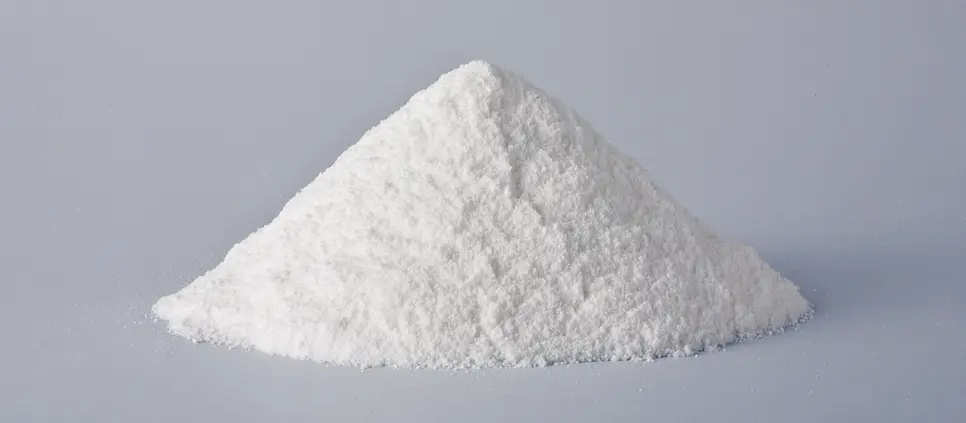
Zinc Oxide — chemical product photo
Químicos industriales y especialesCAS: 1314-13-2

Zinc Oxide

Fabricante y Proveedor de Exportación

Zinc oxide supplier Thailand — rubber, pharma & cosmetic grade ZnO (99.7%+) from $1,500/MT FOB Bangkok. Direct and indirect process.

Grados Disponibles

Grado proceso indirectoGrado proceso directoGrado nano

Opciones de Empaque

saco 25 kgsaco jumbo 500 kg

Descripción del Producto

El Zinc Oxide es un compuesto inorgánico versátil utilizado como activador en la vulcanización del caucho, pigmento blanco en pinturas, bloqueador UV en protectores solares e ingrediente activo en preparaciones farmacéuticas tópicas.

Zinc Oxide Supplier in Thailand — Rubber, Pharma, Cosmetic & Ceramic Grade ZnO

Buyers searching for zinc oxide Thailand sourcing choose Dusit Chemicals as a single-source zinc oxide supplier covering every major grade from one Bangkok/Laem Chabang export base. We supply indirect-process (French-method) zinc oxide at 99.5–99.9% ZnO, direct-process (American-method) zinc oxide at 99.0–99.5% ZnO, and nano-grade ZnO for transparent sunscreen and electronics — so rubber compounders, paint and coatings producers, pharmaceutical formulators, cosmetics houses and ceramic factories can consolidate their zinc oxide procurement with one Thai exporter rather than splitting orders across single-grade manufacturers. Verified product specifications: ZnO content ≥99.7%, lead (Pb) ≤0.01%, specific surface area 3–10 m²/g, CAS 1314-13-2. Where many competing Thai zinc oxide producers lead with raw capacity tonnage, our advantage for export buyers is multi-grade breadth plus complete export documentation: a batch-specific Certificate of Analysis (COA) and GHS-compliant Safety Data Sheet (SDS) on every shipment, and a Form D Certificate of Origin so ASEAN buyers import Thai-origin ZnO at 0% AFTA import duty. Packaging is matched to volume — 25 kg kraft bags for trial and LCL orders, 500 kg jumbo bags for high-throughput rubber and pigment users. FOB Bangkok pricing for direct-process rubber grade starts from $1,500/MT, with transit of 3–5 days to ASEAN and 7–14 days to South Asia and the Middle East.

Direct vs Indirect Process Zinc Oxide: Which Grade to Order

The most important decision when ordering zinc oxide is process route, because it sets purity, particle fineness, typical application and price. Indirect (French) process ZnO is made by vaporising metallic zinc and oxidising the vapour, giving the highest purity (99.5–99.9%), the finest and most uniform particles, and the lowest contaminant levels — the grade specified for cosmetics, USP/EP pharmaceutical ointments and premium coatings. Direct (American) process ZnO is made by reducing zinc ore or secondary zinc and oxidising the resulting vapour, giving slightly lower purity (99.0–99.5%) at a lower cost — the workhorse grade for rubber vulcanisation and general industrial use. Both routes are available from Dusit Chemicals; the table below summarises the trade-offs so you can match grade to application.

ProcessPurity (ZnO)Particle sizeTypical useRelative cost
Indirect (French)99.5–99.9%Finer, uniformCosmetics, USP/EP pharma, premium coatingsHigher
Direct (American)99.0–99.5%CoarserRubber vulcanisation, general industrialLower
Nano-gradeHigh purity, <100 nmNanoparticleTransparent sunscreen, electronicsPremium

Zinc Oxide Applications: Rubber Vulcanization, Sunscreen, Pharma Ointments & Ceramics

Zinc oxide is one of the most versatile inorganic chemicals in industry. (1) Rubber vulcanisation — the largest end use: at 3–5 phr (parts per hundred rubber), ZnO activates the sulfur crosslinking reaction in natural and synthetic rubber, improving tensile strength, heat resistance and elasticity. Our direct-process rubber grade meets ASTM D4643 and is the most economical choice for tyre, hose, gasket and footwear compounding. (2) Sunscreen and cosmetics: non-nano zinc oxide is an FDA-recognised OTC sunscreen active under 21 CFR 352, used at 2–25% to give broad-spectrum UVA/UVB protection; transparent nano-grade ZnO is used where a clear, non-whitening film is required. Cosmetic and pharmaceutical use requires the high-purity indirect-process grade with tight heavy-metal limits. (3) Pharmaceutical ointments: USP/EP-grade ZnO is the active in zinc oxide barrier ointments, diaper-rash creams and calamine lotion, acting as a mild astringent, antiseptic and skin protectant. (4) Paints, coatings and ceramics/glass: ZnO serves as a white pigment, mildew inhibitor and UV stabiliser in coatings, and as a flux and opacifier in ceramic glazes and glass. Across all of these, Dusit Chemicals matches the right process grade — indirect, direct or nano — to the application, with COA, SDS and Form D documentation on every shipment.

Active Zinc Oxide — What It Means and Which Grade to Source

Buyers searching for "active zinc oxide" are typically looking for high-surface-area, high-reactivity zinc oxide — distinct from standard pigment-grade ZnO. Active zinc oxide (also called activated zinc oxide) refers to ZnO with a specific surface area (BET) above 20 m²/g, manufactured via a controlled precipitation or modified indirect process that yields fine, nano- to micro-range particles with heightened chemical reactivity. Active zinc oxide is used primarily in rubber compounding (where its higher surface area accelerates vulcanisation kinetics, reducing cure time and improving crosslink density), in catalyst applications, and in certain pharmaceutical and cosmetic formulations requiring rapid dissolution or high bioavailability. Key specifications for active zinc oxide: ZnO content ≥99.5%, specific surface area (BET) 20–60 m²/g, average particle size 0.1–0.5 µm, oil absorption 25–35 g/100g. Dusit Chemicals sources active zinc oxide from certified manufacturers and exports FOB Bangkok from $1,800/MT. Contact Dusit Chemicals for active zinc oxide specifications, COA samples, and current FOB Bangkok pricing.

Active Zinc Oxide Production Plant Cost — What Buyers & Investors Need to Know

Buyers and investors researching active zinc oxide production plant cost need to understand the three major cost drivers that separate active ZnO from standard pigment-grade ZnO manufacturing: 1. Process route: Active zinc oxide is produced via a wet chemical precipitation route (not the standard direct/indirect thermal oxidation used for pigment ZnO). The precipitation method requires a zinc salt solution (zinc sulfate or zinc chloride), an alkaline precipitating agent (sodium hydroxide or ammonia), controlled pH and temperature reactors, filtration, washing, drying, and calcination at 300–500°C. This multi-step wet chemistry adds significant capital equipment cost versus thermal oxidation plants. 2. Surface area control: Achieving consistent BET surface area of 20–60 m²/g requires precise control of precipitation pH (7.5–9.5), temperature (50–80°C), and aging time. Process variability directly affects product performance in rubber compounding — making QC instrumentation (BET analyser, particle size analyser) a necessary capital item. 3. Calcination and surface treatment: The calcination step (to convert zinc hydroxide to ZnO) and optional surface treatment (stearic acid coating for rubber grade) add energy cost, equipment cost, and process complexity versus standard ZnO. Typical active zinc oxide production plant cost (indicative 2026 references): - Small batch plant (500–1,000 MT/year capacity): USD 500,000–1,500,000 for core equipment (reactors, filtration, dryer, calciner, packaging). Excludes civil works, utilities, permitting. - Medium continuous plant (3,000–5,000 MT/year): USD 2,000,000–5,000,000 fully installed. - Variable production cost (ex-factory, excluding ZnSO4/ZnCl2 raw material): USD 300–600/MT depending on energy cost, labor, and yield efficiency. For most buyers, importing active zinc oxide from established Thai or Chinese producers at USD 1,800–2,200/MT FOB is more economical than investing in local production below 5,000 MT/year capacity. Dusit Chemicals supplies active zinc oxide FOB Bangkok from $1,800/MT with COA, SDS, and BET surface area certificate. Contact us for detailed technical specifications and current pricing.

Zinc Oxide Supplier Thailand — Rubber Grade ZnO Direct Export, ASTM D4643 Compliant

Dusit Chemicals is a zinc oxide supplier in Thailand exporting rubber grade ZnO directly to tyre compounders, rubber goods manufacturers, and chemical distributors across Southeast Asia, South Asia, the Middle East, and Africa. As a dedicated zinc oxide supplier Thailand, our competitive advantage is not only price — it is the combination of multi-grade breadth, rubber-specific technical documentation, and ASEAN export logistics that rubber manufacturers require when consolidating their ZnO procurement. Why rubber manufacturers choose a Thailand zinc oxide supplier over alternatives Thailand is the world's largest natural rubber producer, accounting for approximately 35% of global natural rubber output. This means Thai rubber compounders — including tyre factories, industrial hose producers, gasket and seal manufacturers, and footwear compounders — consume zinc oxide at massive scale domestically, and Thai ZnO suppliers have built export infrastructure, technical depth, and cost competitiveness around rubber-grade zinc oxide that few other origins can match. For buyers outside Thailand, sourcing from a Thailand zinc oxide supplier for rubber grade products offers three structural advantages: (1) Competitive FOB Bangkok pricing for direct-process (American-method) ZnO at 99.0–99.5% purity starts from $1,500/MT — reflecting Thai economies of scale in ZnO supply to its own rubber industry. (2) ASEAN 0% import duty under AFTA for buyers in Indonesia, Malaysia, Vietnam, Philippines, Myanmar, Cambodia, and other ASEAN member states — a 5–10% duty saving versus Chinese or Indian ZnO for ASEAN-based rubber manufacturers. (3) Transit times from Laem Chabang of 2–4 days to Indonesian rubber factories (Surabaya, Medan), 2–3 days to Malaysian tyre compounders (Port Klang, Penang), and 3–5 days to Vietnamese rubber goods manufacturers (HCMC, Hai Phong). Rubber grade zinc oxide: technical specifications and ASTM D4643 compliance Rubber compounders sourcing ZnO for vulcanization need to verify that the zinc oxide meets the industry-standard ASTM D4643 specification for zinc oxide used in rubber compounding. Dusit Chemicals supplies direct-process (American-method) zinc oxide that meets ASTM D4643 requirements across all key parameters: - ZnO content (assay by EDTA titration): ≥99.0% — ASTM D4643 minimum; our direct-process ZnO consistently assays at 99.0–99.5%. - Lead (Pb) content: ≤0.005% — critical for non-contamination of food-contact rubber articles and children's products. - Specific surface area (BET): 3–10 m²/g for standard rubber grade; 20–60 m²/g for active/activated grade where faster vulcanization kinetics are required. - Residue on 325 mesh (44 µm sieve): ≤0.1% — ensures particle size is fine enough for uniform dispersion in rubber matrices during mixing. - Loss on ignition (LOI at 1000°C): ≤0.2% — a measure of ZnO purity and absence of carbonates/hydroxides. - Volatile matter at 105°C: ≤0.3%. - Oil absorption (linseed oil): 15–25 g/100g — relevant for dispersion in rubber compounds. For indirect-process (French-method) zinc oxide at 99.5–99.9% purity, the same ASTM D4643 framework applies with tighter heavy-metal limits — this grade is specified for pharmaceutical ointments, cosmetic sunscreens, and premium coatings where the highest purity is required. Rubber grade zinc oxide: dosage and vulcanization function Zinc oxide is an essential vulcanization activator in sulfur-cured rubber. It functions by reacting with the organic accelerator (typically MBT, MBTS, CBS, or TMTD) to form zinc complexes that activate the sulfur crosslinking reaction, dramatically increasing crosslink density, improving tensile strength, heat resistance, flex fatigue life, and compression set compared to rubber compounds without ZnO. Standard rubber grade ZnO dosage: 3–5 phr (parts per hundred rubber) in natural rubber (NR) and synthetic rubber (SBR, EPDM, NBR, CR) compounds. Lower dosage (1–2 phr) is used in active/high-surface-area ZnO formulations where the greater reactivity compensates for reduced quantity. In butyl rubber (IIR) used for tyre inner liners and pharmaceutical stoppers, ZnO is used at 1–3 phr. Common rubber applications and ZnO grade selection: - Passenger car and truck tyres (NR/SBR/BR blends): Direct-process 99.0–99.5%, 3–5 phr, ASTM D4643 compliant - Industrial rubber hose and belting (EPDM, SBR): Direct-process 99.0–99.5%, 3–5 phr - Rubber gloves and latex goods (NR latex): Indirect-process 99.5–99.7%, 1–3 phr, strict heavy-metal limits for food-contact gloves - Footwear soles and components (SBR, NBR): Direct-process 99.0–99.5%, 3–5 phr - Gaskets and seals (NBR, EPDM, VMQ): Direct-process 99.0–99.5%, 2–4 phr; indirect-process for pharmaceutical seals - Pharmaceutical rubber closures (butyl IIR): Indirect-process USP/EP grade, 1–2 phr, heavy metals ≤10 ppm How to order rubber grade zinc oxide from Dusit Chemicals Thailand Ordering is straightforward. Standard lead time from order confirmation to FOB Bangkok is 5–10 business days. Packaging: 25 kg multi-wall kraft paper bags (200 bags per pallet, 5 MT per pallet equivalent), palletized for container loading; or 500 kg FIBC jumbo bags for high-throughput compounders. Standard container yield: 25 MT per 20ft FCL (1,000 × 25 kg bags) or 24 MT per 20ft FCL in jumbo bags. Documentation with every rubber grade ZnO shipment: Batch-specific Certificate of Analysis (ZnO assay, Pb content, BET surface area, LOI, sieve residue, volatile matter, oil absorption, specific gravity); GHS-compliant Safety Data Sheet; ASTM D4643 compliance statement; Certificate of Origin (Form D for ASEAN 0% import duty); Packing list and commercial invoice with HS code 2817.00 (Zinc oxide and zinc peroxide). Payment terms: 30% T/T deposit + 70% T/T before shipment for new buyers; open account or L/C at sight for established buyers. Minimum order: 1 MT LCL trial (25 kg bags) or 5 MT FCL. Contact our export team for a current proforma invoice and COA for rubber grade zinc oxide — response within 4 business hours.

ZnO GradeProcessPurity (ZnO)BET Surface AreaRubber ApplicationFOB Bangkok 2026
Standard Rubber GradeDirect (American)99.0–99.5%3–10 m²/gTyres, hose, belting, footwear — 3–5 phr$1,500–$1,750/MT
Active / High-Surface Rubber GradePrecipitation≥99.5%20–60 m²/gFast-cure rubber, reduced ZnO loading (1–2 phr)$1,800–$2,200/MT
Indirect (French) GradeIndirect (French)99.5–99.9%3–10 m²/gPharmaceutical rubber, food-contact latex, premium coatings$1,800–$2,100/MT
Nano GradeControlled oxidationHigh purity, <100 nm>30 m²/gTransparent sunscreen, electronics, advanced compositesPremium — contact for quote

Zinc Oxide for Rubber, Pharmaceutical & Cosmetic Applications — Related Chemicals from Dusit Chemicals Thailand

Dusit Chemicals is a multi-product chemical exporter in Thailand, enabling rubber manufacturers, pharmaceutical formulators, and cosmetic producers to source zinc oxide alongside complementary raw materials from a single supplier in one consolidated container shipment. The following products are commonly purchased together with zinc oxide by Dusit Chemicals customers: <a href="/products/stearic-acid">Stearic Acid (Rubber Grade)</a> — the essential co-activator with zinc oxide in rubber vulcanization. In rubber compounding, stearic acid reacts with ZnO to form zinc stearate, which is the actual soluble zinc species that activates the accelerator-sulfur crosslinking reaction. Every rubber compound using ZnO (3–5 phr) also requires stearic acid (1–3 phr). Dusit Chemicals supplies rubber-grade stearic acid (C18 content ≥50%, iodine value ≤0.5) alongside zinc oxide — enabling rubber manufacturers to source both activators from one Thai exporter. FOB Bangkok pricing from $900/MT. <a href="/products/titanium-dioxide">Titanium Dioxide (TiO₂)</a> — the primary white pigment companion to zinc oxide in paints, coatings, and cosmetics. Where zinc oxide provides UV-blocking, mildew resistance, and secondary pigmentation, titanium dioxide (rutile grade, TiO₂ ≥98%) provides the dominant white hiding power in decorative and protective coatings. Paint manufacturers, sunscreen formulators blending mineral UV filters, and ceramic glaze producers often purchase TiO₂ and ZnO from Dusit Chemicals in the same container. Rutile TiO₂ from $2,800/MT FOB Bangkok. <a href="/products/glycerin">Glycerin (99.5% USP/BP)</a> — the humectant and vehicle base for pharmaceutical zinc oxide ointments, diaper rash creams, calamine lotion, and cosmetic sunscreen emulsions. Pharmaceutical formulators producing zinc oxide-based topical products typically purchase USP/BP glycerin as a skin-softening co-ingredient alongside their pharmaceutical-grade ZnO. Palm-derived Halal CICOT certified glycerin from $850/MT FOB Bangkok. Contact Dusit Chemicals to request a consolidated quotation for zinc oxide plus related products in the same container — combining products reduces per-MT freight cost and consolidates import documentation into a single customs entry.

Aplicaciones Típicas

Activador de vulcanización del caucho
Pinturas y recubrimientos (pigmento blanco)
Formulaciones de protección solar
Pomadas farmacéuticas
Fabricación de cerámica y vidrio

Especificaciones Técnicas

ParámetroEspecificación
AparienciaPolvo fino blanco
Contenido de ZnO≥99.7%
Plomo (Pb)≤0.01%
Superficie específica3–10 m²/g

* Las especificaciones son valores típicos. La especificación final se confirma mediante COA por lote. Contáctenos para grados personalizados.

Empaque Disponible

saco 25 kg
saco jumbo 500 kg

Documentación Disponible

Certificado de Análisis (COA)
Informe de CC específico por lote que confirma las especificaciones del producto.
Hoja de Datos de Seguridad (MSDS/SDS)
Información de peligros y directrices de manejo seguro según estándares GHS.
Hoja de Datos Técnicos (TDS)
Propiedades detalladas del producto, grados y orientación de aplicación.
Folleto del Producto
Resumen comercial para referencia de compras y técnica.

Solicite documentación a través de nuestro formulario de cotización o directamente por correo electrónico.

Preguntas Frecuentes

¿Para qué se utiliza Zinc Oxide?›
El Zinc Oxide es un compuesto inorgánico versátil utilizado como activador en la vulcanización del caucho, pigmento blanco en pinturas, bloqueador UV en protectores solares e ingrediente activo en preparaciones farmacéuticas tópicas. Las principales aplicaciones incluyen: Activador de vulcanización del caucho, Pinturas y recubrimientos (pigmento blanco), Formulaciones de protección solar, Pomadas farmacéuticas.
¿Qué grados de Zinc Oxide están disponibles?›
Suministramos Zinc Oxide en los siguientes grados: Grado proceso indirecto, Grado proceso directo, Grado nano. Contacte a nuestro equipo para confirmar el grado requerido para su aplicación.
¿Cuál es la cantidad mínima de pedido (MOQ) para Zinc Oxide?›
Las cantidades mínimas de pedido para Zinc Oxide son flexibles y dependen del destino, formato de empaque y grado. Generalmente trabajamos desde 1 MT para pedidos de exportación. Contacte a nuestro equipo de ventas para una cotización formal.
¿Qué documentación se incluye con Zinc Oxide?›
Cada envío de Zinc Oxide incluye un Certificado de Análisis (COA), Hoja de Datos de Seguridad (MSDS/SDS) y Ficha Técnica (TDS). El Certificado de Origen, Lista de Empaque y certificados de inspección pre-embarque están disponibles bajo solicitud.
¿Qué empaque está disponible para Zinc Oxide?›
Zinc Oxide está disponible en los siguientes formatos de empaque: 25 kg bag, 500 kg jumbo bag. Se puede organizar etiquetado personalizado y paletización para exportación.

Por Qué Comprarnos

Calidad EstableEspecificación consistente entre lotes con verificación de COA.
Tarifas Competitivas a GranelPrecios directos de fábrica con niveles de descuento por volumen.
MOQ FlexibleCantidades mínimas de pedido negociables según producto y destino.
Soporte de ExportaciónDocumentación, etiquetado y coordinación logística incluidos.
Tiempos de Entrega ConfiablesPrograma de producción firme y compromiso de envío puntual.
Servicio ResponsivoContacto comercial dedicado para su cuenta.

Solicitar una Cotización

Obtenga precios para Zinc Oxide — especifique cantidad, grado y destino.

Respuesta en 24 horas · Todas las consultas son confidenciales

¿Prefiere Contactar Directamente?

+66-65-262-4557 (Thailand)
sales@dusitchemicals.com

Guía de Precios de Exportación de Zinc Oxide

Precios FOB — contáctenos para cotizaciones exactas actuales.

GradoRango de PrecioNotas
Proceso directo (Caucho)$1,500-1,800/MTMost traded grade for rubber industry
Proceso indirecto (Premium)$2,000-2,500/MTPaints, coatings, ceramics
Farmacéutico/Cosmético (USP)$2,500-3,500/MTSunscreen, ointments
Grado nano$5,000-8,000/MTTransparent sunscreen, electronics

Preguntas Frecuentes — Zinc Oxide

¿Para qué se utiliza el zinc oxide industrialmente?
El zinc oxide se utiliza principalmente como activador de vulcanización del caucho (60% de la demanda mundial), pigmento blanco en pinturas y recubrimientos, absorbedor UV en protectores solares, materia prima para productos químicos de zinc y en la fabricación de cerámica/vidrio. La producción mundial anual supera 1,5 millones de MT.
¿Cuál es la diferencia entre el zinc oxide de proceso directo e indirecto?
El proceso indirecto (francés) produce ZnO de mayor pureza (99,5-99,9%) con partículas más finas — utilizado en cosméticos, farma y recubrimientos premium. El proceso directo (americano) produce menor pureza (99-99,5%) a menor costo — utilizado en caucho y aplicaciones industriales generales.
¿Cuál es el precio del zinc oxide por tonelada?
Los precios del zinc oxide oscilan entre $1,500-2,500/MT FOB dependiendo del grado y proceso. El proceso directo (grado caucho) es de $1,500-1,800/MT. El proceso indirecto (premium) es de $2,000-2,500/MT. El ZnO nano-grado tiene precios de $5,000+/MT para aplicaciones cosméticas.
¿Es seguro el zinc oxide para cosméticos y protectores solares?
Sí. El zinc oxide (no-nano) está aprobado por la FDA y la UE como ingrediente activo físico de protector solar. Proporciona protección de amplio espectro UVA/UVB. El grado farmacéutico/cosmético debe cumplir con las normas de pureza USP o EP con límites de metales pesados (Pb <0,001%).
Where in Thailand is zinc oxide produced and exported from?
Dusit Chemicals exports zinc oxide from Bangkok and Laem Chabang, Thailand, supplying indirect-process (French, 99.5–99.9% ZnO), direct-process (American, 99.0–99.5% ZnO) and nano grades. Every shipment includes a COA and SDS, and ASEAN buyers receive a Form D Certificate of Origin to import Thai-origin ZnO at 0% AFTA import duty. Packaging is 25 kg kraft bags or 500 kg jumbo bags, with transit of 3–5 days to ASEAN and 7–14 days to South Asia and the Middle East.
What ZnO grade is used for rubber vulcanization?
Rubber compounding uses direct-process (American) rubber-grade zinc oxide, dosed at 3–5 phr (parts per hundred rubber) to activate the sulfur crosslinking reaction and improve tensile strength, heat resistance and elasticity. Dusit Chemicals supplies rubber-grade ZnO meeting ASTM D4643 from $1,500/MT FOB Bangkok.
What is active zinc oxide and how does it differ from standard zinc oxide?
Active zinc oxide (also called activated zinc oxide) refers to ZnO with a high specific surface area (BET) — typically above 20 m²/g — produced via a controlled wet-chemical precipitation route rather than the standard thermal oxidation (direct or indirect process) used for pigment-grade ZnO. The key differences: Standard (pigment-grade) zinc oxide has a BET surface area of 3–10 m²/g and is used as a rubber vulcanization activator, white pigment, and UV filter in sunscreens. Active zinc oxide has a BET surface area of 20–60 m²/g and average particle size of 0.1–0.5 µm — its heightened reactivity accelerates vulcanisation kinetics in rubber compounding (faster cure, improved crosslink density) and is also used in catalysis and high-bioavailability pharmaceutical formulations. In practice, rubber compounders specify active zinc oxide when they need to reduce cure time, lower ZnO loading (from 3–5 phr down to 1–2 phr active grade), or improve dispersion in tight compound formulations. Standard ZnO remains the dominant grade for most rubber applications by volume. Dusit Chemicals supplies both standard direct/indirect process zinc oxide from $1,500/MT and active zinc oxide from $1,800/MT FOB Bangkok, with BET surface area certificates on request.
What is zinc oxide used for in rubber manufacturing?
Zinc oxide is the essential vulcanization activator in sulfur-cured natural and synthetic rubber — by far its largest industrial end use, accounting for approximately 60% of global ZnO consumption. In rubber compounding, ZnO functions as an activator for organic accelerators (MBT, MBTS, CBS, TMTD), forming zinc-accelerator complexes that catalyze the sulfur crosslinking reaction. This dramatically increases crosslink density, improving the mechanical properties of the final rubber article: tensile strength increases by 30–80%, heat resistance extends service life, flex fatigue performance improves, and compression set is reduced. Standard dosage for direct-process rubber-grade ZnO: 3–5 phr (parts per hundred rubber) in natural rubber (NR), SBR, EPDM, NBR, and CR compounds. Active/high-surface-area ZnO is used at 1–2 phr where faster vulcanization kinetics or lower ZnO loadings are required. Key rubber applications: passenger car and truck tyres (NR/SBR/BR blends), industrial hose and belting (EPDM, SBR), rubber gloves and latex goods (NR latex), footwear soles (SBR, NBR), gaskets and seals (NBR, EPDM), and conveyor belts. For rubber manufacturers, Dusit Chemicals supplies direct-process (American-method) rubber-grade ZnO meeting ASTM D4643 from $1,500/MT FOB Bangkok, with batch-specific COA covering ZnO assay, Pb content, BET surface area, sieve residue, and oil absorption.
What is the difference between American Process and French Process zinc oxide?
The American Process (direct process) and French Process (indirect process) are the two principal industrial routes for manufacturing zinc oxide, producing ZnO with meaningfully different purity levels, particle characteristics, and end-use suitability. American Process (Direct Process): Zinc ore or secondary zinc (zinc-containing scrap or residues) is reduced with coke/coal in a furnace, and the resulting zinc vapor is immediately oxidized in air to form ZnO. Because it starts from impure zinc sources, the direct-process ZnO is less pure — typically 99.0–99.5% ZnO content — and may contain small amounts of lead, cadmium, and other metal impurities reflecting the raw material. Particle size is typically coarser (BET surface area 3–7 m²/g). It is the lowest-cost route and the dominant grade for rubber vulcanization and general industrial applications. French Process (Indirect Process): High-purity metallic zinc (99.99%+ electrolytic zinc) is first melted and then vaporized in a retort or muffle furnace; the zinc vapor is oxidized in a controlled air stream to produce ZnO. Starting from pure zinc metal, the resulting ZnO reaches 99.5–99.9% purity with extremely low heavy metal impurities (Pb ≤0.005%, Cd ≤0.001%). Particle size is finer and more uniform (BET surface area 4–10 m²/g). French-process ZnO is specified for cosmetics (sunscreen, where heavy metal purity is critical for regulatory compliance), pharmaceutical ointments and creams (USP/EP grade), premium coatings, and electronic/semiconductor applications. Price premium of 20–35% over direct-process grade reflects the purer zinc feedstock cost. Dusit Chemicals supplies both grades from Thailand — specify your application and we will confirm the correct process route, purity specification, and FOB Bangkok pricing.
What ZnO purity is required for pharmaceutical grade zinc oxide?
Pharmaceutical grade zinc oxide must meet the United States Pharmacopeia (USP) or European Pharmacopoeia (EP/BP) monograph for zinc oxide, which specifies stricter purity and impurity limits than industrial or rubber grades. USP (United States Pharmacopeia, current edition) pharmaceutical zinc oxide specification: ZnO content (assay by EDTA complexometric titration or atomic absorption) ≥99.0% on the ignited basis (this accounts for water and CO₂ absorbed on the surface). Lead (Pb) limit: ≤0.001% (10 ppm) — significantly tighter than rubber-grade (≤0.010%). Arsenic (As): ≤0.003% (3 ppm). Heavy metals (as Pb): ≤0.002% total by USP method. Alkalinity: passes test (indicates absence of excess alkali from manufacturing process). Loss on ignition: ≤1.0% at 500°C. EP/BP specification is essentially equivalent to USP for zinc oxide, with ZnO assay ≥99.0%, lead ≤10 ppm, arsenic ≤3 ppm. For sunscreen and cosmetic use, the FDA OTC Monograph (21 CFR 352) does not separately specify purity but requires use of USP-grade ZnO. EU Cosmetics Regulation (EC 1223/2009) requires cosmetic-grade ZnO to be free from microbiological contamination and within safe concentration limits. In practice, pharmaceutical-grade zinc oxide from Dusit Chemicals (indirect/French-process, 99.7% ZnO, Pb ≤0.005%) exceeds USP and EP minimum requirements — making it suitable for sunscreen formulations, zinc oxide ointments, diaper rash creams, and calamine lotion. FOB Bangkok pricing for pharmaceutical-grade ZnO: $2,500–$3,500/MT with full USP/EP-compliant Certificate of Analysis.
What is the minimum order quantity (MOQ) for zinc oxide from Thailand?
Minimum order quantity (MOQ) for zinc oxide from Dusit Chemicals Thailand: LCL trial order: 1 MT (40 × 25 kg bags) for first-time buyers wanting to test quality before committing to a full container. Full FCL (20ft container): approximately 20 MT in 25 kg bags (800 bags per container) or 20 MT in 500 kg FIBC jumbo bags (40 bags per container). Pricing by volume: LCL 1–4 MT: $1,700–$1,800/MT (includes LCL handling premium); FCL 20 MT: $1,500–$1,750/MT for direct-process rubber grade; FCL indirect-process premium grade: $2,000–$2,500/MT; pharmaceutical-grade ZnO: $2,500–$3,500/MT. Sample orders (1–5 kg for formulation testing) are available before first commercial order placement. Payment terms for new buyers: 30% TT deposit + 70% TT before shipment. Lead time from order confirmation to FOB Bangkok: 5–10 business days for standard rubber and indirect grades; 10–15 business days for pharmaceutical grade with full USP/EP documentation. For ASEAN buyers (Indonesia, Malaysia, Vietnam, Philippines), Form D Certificate of Origin is provided for 0% AFTA import duty on Thai-origin ZnO (HS code 2817.00). Contact Dusit Chemicals for a current proforma invoice and COA within 4 business hours.
How is zinc oxide packaged and shipped from Thailand?
Zinc oxide is a white fine powder (bulk density approximately 0.5–0.9 g/cm³) that requires moisture-proof packaging to prevent agglomeration and maintain flowability. Dusit Chemicals exports zinc oxide from Thailand in the following packaging configurations: (1) 25 kg multi-wall kraft paper bags with PE inner liner: the standard export format for most buyers. Each bag is heat-sealed and moisture-resistant. Palletized at 40 bags per pallet (1 MT/pallet) for container loading. A 20ft FCL container holds approximately 800 bags = 20 MT. Suitable for all grades (rubber, indirect, pharmaceutical). (2) 500 kg FIBC jumbo bags (big bags): for high-throughput rubber compounders and pigment users who have bulk bag handling equipment (bag spear or bag unloader). A 20ft container holds 40 × 500 kg jumbo bags = 20 MT. Lower per-unit handling cost at destination; requires forklift and bulk bag discharge infrastructure. (3) Custom packaging on request: 50 kg bags or other specifications can be arranged for buyers with specific packaging requirements. ZnO is not classified as a dangerous good under IMDG for standard ocean freight — no DG surcharges apply for 25 kg bags or jumbo bags. Transit times from Laem Chabang port: ASEAN (Indonesia, Malaysia, Vietnam, Philippines) 3–5 days; South Asia (India, Bangladesh, Pakistan) 8–14 days; Middle East (UAE, Saudi Arabia) 10–16 days; East Africa 16–22 days; West Africa 20–28 days. All shipments include COA, SDS (GHS-compliant), Certificate of Origin (Form D for ASEAN), and packing list/commercial invoice.
What is the price of zinc oxide FOB Bangkok in 2026?
Zinc oxide FOB Bangkok pricing reference for 2026 by grade: Direct-process (American-process) rubber grade 99.0–99.5% ZnO: $1,500–$1,800/MT for FCL orders (20 MT per 20ft container in 25 kg bags). Active/high-surface-area ZnO (BET >20 m²/g, precipitation process): $1,800–$2,200/MT. Indirect-process (French-process) premium grade 99.5–99.9% ZnO: $2,000–$2,500/MT. Pharmaceutical-grade ZnO (USP/EP compliant, indirect-process, heavy metals ≤10 ppm): $2,500–$3,500/MT. Nano-grade ZnO (<100 nm, transparent sunscreen and electronics grade): $5,000–$8,000/MT — contact for specific quote. Pricing is driven by zinc metal LME prices (zinc oxide pricing tracks LME zinc with a 4–6 week lag), energy costs, and process route. ASEAN buyers benefit from 0% AFTA import duty under AFTA with Form D Certificate of Origin (HS code 2817.00), reducing landed cost by 5–10% versus Chinese or non-ASEAN sourced ZnO for Indonesian, Vietnamese, Malaysian, and Philippine buyers. FOB pricing is for 25 kg bags at Laem Chabang port; jumbo bag pricing is similar per MT. LCL trial orders 1–4 MT carry a $100–200/MT premium over FCL pricing. Contact Dusit Chemicals for a current FOB Bangkok proforma invoice — response within 4 business hours.
What certifications does the zinc oxide supplier carry?
Dusit Chemicals zinc oxide shipments from Thailand are accompanied by the following certifications and compliance documentation: (1) Certificate of Analysis (COA): Batch-specific laboratory analysis covering ZnO assay (by EDTA titration), lead (Pb) content, specific surface area (BET for active grade), sieve residue (325 mesh), loss on ignition, volatile matter, oil absorption, and specific gravity — reported against the applicable specification (ASTM D4643 for rubber grade; USP/EP for pharmaceutical grade). (2) GHS-compliant Safety Data Sheet (SDS/MSDS): Covering all 16 GHS sections, available in English; Arabic and other languages available on request for Middle East buyers. (3) Certificate of Origin (Form D): For ASEAN buyers, the Form D issued by the Thai Department of Foreign Trade certifies Thai origin and enables 0% AFTA import duty at destination. (4) REACH Compliance Letter: Confirms ZnO (CAS 1314-13-2) REACH registration status under EU REACH Regulation (EC 1907/2006) — required for EU cosmetics, rubber, and coatings buyers. (5) ASTM D4643 Compliance Statement: For rubber-grade direct-process ZnO, confirming compliance with ASTM D4643 standard specification for zinc oxide used in rubber compounding. (6) USP/EP Compliance Statement: For pharmaceutical-grade ZnO, confirming compliance with USP and/or EP monograph specification — with full pharmacopoeial test data on COA. (7) Halal certification: Available on request from a recognized Thai halal authority for ZnO used in cosmetic and pharmaceutical products for Muslim-majority markets. (8) SGS/Bureau Veritas third-party inspection: Available on request at buyer's cost before shipment loading at Bangkok/Laem Chabang.
What is nano zinc oxide used for?
Nano zinc oxide (nano ZnO, nanoparticle zinc oxide, particle size <100 nm) has unique properties compared to conventional (bulk) zinc oxide due to its dramatically increased surface area and quantum confinement effects — enabling applications where standard ZnO cannot perform. The principal commercial applications for nano ZnO are: (1) Transparent sunscreen formulations: The most commercially important nano ZnO application. Conventional non-nano zinc oxide (particle size 0.2–0.5 µm) produces a white, opaque film on skin that many consumers find cosmetically unacceptable. Nano ZnO at <100 nm particle size scatters visible light minimally (appearing transparent or near-transparent on skin) while still absorbing UV radiation (both UVA and UVB) effectively. This gives consumers the broad-spectrum UV protection of a physical mineral sunscreen without the white cast — enabling "invisible" sunscreen products. Nano ZnO is used in sunscreen at 5–20% by weight. Regulatory status: The EU Scientific Committee on Consumer Safety (SCCS) has assessed nano ZnO as safe for use in sunscreen products at up to 25% where dermally applied (Opinion SCCS/1489/12 and updates). The FDA OTC sunscreen monograph (21 CFR 352) requires non-nano ZnO (particle size >100 nm); nano ZnO is currently evaluated under FDA's newer testing framework. (2) Photocatalytic antimicrobial applications: Nano ZnO generates reactive oxygen species (ROS) under UV and visible light irradiation, giving it potent photocatalytic antimicrobial activity against bacteria, fungi, and viruses. Used in antimicrobial coatings for medical devices, food packaging, and air purification filters. (3) Electronics and semiconductors: ZnO is a wide-bandgap semiconductor (3.37 eV) with piezoelectric and pyroelectric properties. Nano ZnO is used in piezoelectric nanogenerators, varistors, UV LEDs, and thin-film transistors. (4) Advanced composites and rubber: Nano ZnO at 1–3 phr in natural rubber compounding improves tensile strength and reduces permeability compared to conventional ZnO, due to better dispersion at nanoscale. Dusit Chemicals supplies nano-grade ZnO for transparent sunscreen and electronics applications at $5,000–$8,000/MT FOB Bangkok — contact our technical team for particle size distribution data and formulation guidance.
WhatsAppSolicitar Cotización