
Zinc Oxide
Manufacturer & Export Supplier
Zinc oxide supplier Thailand — rubber, pharma & cosmetic grade ZnO (99.7%+) from $1,500/MT FOB Bangkok. Direct and indirect process.
Available Grades
Packaging Options
Product Overview
Active Zinc Oxide (ZnO, CAS 1314-13-2) — also referred to as active zinc oxide in rubber compounding and sunscreen manufacturing — is one of the most versatile inorganic chemicals in global industry, used as a rubber vulcanization activator, white pigment, UV filter, pharmaceutical active, and electronic semiconductor. Dusit Chemicals is an active zinc oxide supplier in Thailand exporting ZnO to rubber manufacturers, paint producers, cosmetics formulators, pharmaceutical companies, and ceramic factories across Southeast Asia, South Asia, the Middle East, and Africa. As a zinc oxide supplier Thailand, we offer three main grades: Direct Process (American Process, 99.0–99.5% ZnO), Indirect Process (French Process, 99.5–99.9% ZnO), and Nano-grade ZnO for premium sunscreen and electronics. Rubber vulcanization is the largest end-use — zinc oxide at 3–5 phr (parts per hundred rubber) activates the sulfur crosslinking reaction in natural and synthetic rubber, improving tensile strength, heat resistance, and elasticity. Our rubber-grade ZnO meets ASTM D4643 standards. For pharmaceutical and cosmetic applications, our ZnO USP grade (Pharmacopoeial) meets United States Pharmacopeia (USP), European Pharmacopoeia (EP), and BP standards with heavy metal limits (Pb ≤0.001%, As ≤0.003%) for use in zinc oxide ointments (topical antiseptic/barrier), diaper rash creams, sunscreen formulations (SPF booster, UVA/UVB blocker), and calamine lotion. Non-nano zinc oxide is FDA-approved (21 CFR 352) as an OTC sunscreen active ingredient at 2–25% concentration. FOB Bangkok pricing from $1,500/MT for direct process rubber grade. Shipment in 25 kg kraft bags, 500 kg jumbo bags, or custom pallets. Transit: 3–5 days ASEAN, 7–14 days South Asia/Middle East. Full documentation: COA, SDS, Certificate of Origin, and product-specific compliance letters (USP, REACH, Halal on request).
Zinc Oxide Supplier in Thailand — Rubber, Pharma, Cosmetic & Ceramic Grade ZnO
Buyers searching for zinc oxide Thailand sourcing choose Dusit Chemicals as a single-source zinc oxide supplier covering every major grade from one Bangkok/Laem Chabang export base. We supply indirect-process (French-method) zinc oxide at 99.5–99.9% ZnO, direct-process (American-method) zinc oxide at 99.0–99.5% ZnO, and nano-grade ZnO for transparent sunscreen and electronics — so rubber compounders, paint and coatings producers, pharmaceutical formulators, cosmetics houses and ceramic factories can consolidate their zinc oxide procurement with one Thai exporter rather than splitting orders across single-grade manufacturers. Verified product specifications: ZnO content ≥99.7%, lead (Pb) ≤0.01%, specific surface area 3–10 m²/g, CAS 1314-13-2. Where many competing Thai zinc oxide producers lead with raw capacity tonnage, our advantage for export buyers is multi-grade breadth plus complete export documentation: a batch-specific Certificate of Analysis (COA) and GHS-compliant Safety Data Sheet (SDS) on every shipment, and a Form D Certificate of Origin so ASEAN buyers import Thai-origin ZnO at 0% AFTA import duty. Packaging is matched to volume — 25 kg kraft bags for trial and LCL orders, 500 kg jumbo bags for high-throughput rubber and pigment users. FOB Bangkok pricing for direct-process rubber grade starts from $1,500/MT, with transit of 3–5 days to ASEAN and 7–14 days to South Asia and the Middle East.
Direct vs Indirect Process Zinc Oxide: Which Grade to Order
The most important decision when ordering zinc oxide is process route, because it sets purity, particle fineness, typical application and price. Indirect (French) process ZnO is made by vaporising metallic zinc and oxidising the vapour, giving the highest purity (99.5–99.9%), the finest and most uniform particles, and the lowest contaminant levels — the grade specified for cosmetics, USP/EP pharmaceutical ointments and premium coatings. Direct (American) process ZnO is made by reducing zinc ore or secondary zinc and oxidising the resulting vapour, giving slightly lower purity (99.0–99.5%) at a lower cost — the workhorse grade for rubber vulcanisation and general industrial use. Both routes are available from Dusit Chemicals; the table below summarises the trade-offs so you can match grade to application.
| Process | Purity (ZnO) | Particle size | Typical use | Relative cost |
|---|---|---|---|---|
| Indirect (French) | 99.5–99.9% | Finer, uniform | Cosmetics, USP/EP pharma, premium coatings | Higher |
| Direct (American) | 99.0–99.5% | Coarser | Rubber vulcanisation, general industrial | Lower |
| Nano-grade | High purity, <100 nm | Nanoparticle | Transparent sunscreen, electronics | Premium |
Zinc Oxide Applications: Rubber Vulcanization, Sunscreen, Pharma Ointments & Ceramics
Zinc oxide is one of the most versatile inorganic chemicals in industry. (1) Rubber vulcanisation — the largest end use: at 3–5 phr (parts per hundred rubber), ZnO activates the sulfur crosslinking reaction in natural and synthetic rubber, improving tensile strength, heat resistance and elasticity. Our direct-process rubber grade meets ASTM D4643 and is the most economical choice for tyre, hose, gasket and footwear compounding. (2) Sunscreen and cosmetics: non-nano zinc oxide is an FDA-recognised OTC sunscreen active under 21 CFR 352, used at 2–25% to give broad-spectrum UVA/UVB protection; transparent nano-grade ZnO is used where a clear, non-whitening film is required. Cosmetic and pharmaceutical use requires the high-purity indirect-process grade with tight heavy-metal limits. (3) Pharmaceutical ointments: USP/EP-grade ZnO is the active in zinc oxide barrier ointments, diaper-rash creams and calamine lotion, acting as a mild astringent, antiseptic and skin protectant. (4) Paints, coatings and ceramics/glass: ZnO serves as a white pigment, mildew inhibitor and UV stabiliser in coatings, and as a flux and opacifier in ceramic glazes and glass. Across all of these, Dusit Chemicals matches the right process grade — indirect, direct or nano — to the application, with COA, SDS and Form D documentation on every shipment.
Active Zinc Oxide — What It Means and Which Grade to Source
Buyers searching for "active zinc oxide" are typically looking for high-surface-area, high-reactivity zinc oxide — distinct from standard pigment-grade ZnO. Active zinc oxide (also called activated zinc oxide) refers to ZnO with a specific surface area (BET) above 20 m²/g, manufactured via a controlled precipitation or modified indirect process that yields fine, nano- to micro-range particles with heightened chemical reactivity. Active zinc oxide is used primarily in rubber compounding (where its higher surface area accelerates vulcanisation kinetics, reducing cure time and improving crosslink density), in catalyst applications, and in certain pharmaceutical and cosmetic formulations requiring rapid dissolution or high bioavailability. Key specifications for active zinc oxide: ZnO content ≥99.5%, specific surface area (BET) 20–60 m²/g, average particle size 0.1–0.5 µm, oil absorption 25–35 g/100g. Dusit Chemicals sources active zinc oxide from certified manufacturers and exports FOB Bangkok from $1,800/MT. Contact Dusit Chemicals for active zinc oxide specifications, COA samples, and current FOB Bangkok pricing.
Active Zinc Oxide Production Plant Cost — What Buyers & Investors Need to Know
Buyers and investors researching active zinc oxide production plant cost need to understand the three major cost drivers that separate active ZnO from standard pigment-grade ZnO manufacturing: 1. Process route: Active zinc oxide is produced via a wet chemical precipitation route (not the standard direct/indirect thermal oxidation used for pigment ZnO). The precipitation method requires a zinc salt solution (zinc sulfate or zinc chloride), an alkaline precipitating agent (sodium hydroxide or ammonia), controlled pH and temperature reactors, filtration, washing, drying, and calcination at 300–500°C. This multi-step wet chemistry adds significant capital equipment cost versus thermal oxidation plants. 2. Surface area control: Achieving consistent BET surface area of 20–60 m²/g requires precise control of precipitation pH (7.5–9.5), temperature (50–80°C), and aging time. Process variability directly affects product performance in rubber compounding — making QC instrumentation (BET analyser, particle size analyser) a necessary capital item. 3. Calcination and surface treatment: The calcination step (to convert zinc hydroxide to ZnO) and optional surface treatment (stearic acid coating for rubber grade) add energy cost, equipment cost, and process complexity versus standard ZnO. Typical active zinc oxide production plant cost (indicative 2026 references): - Small batch plant (500–1,000 MT/year capacity): USD 500,000–1,500,000 for core equipment (reactors, filtration, dryer, calciner, packaging). Excludes civil works, utilities, permitting. - Medium continuous plant (3,000–5,000 MT/year): USD 2,000,000–5,000,000 fully installed. - Variable production cost (ex-factory, excluding ZnSO4/ZnCl2 raw material): USD 300–600/MT depending on energy cost, labor, and yield efficiency. For most buyers, importing active zinc oxide from established Thai or Chinese producers at USD 1,800–2,200/MT FOB is more economical than investing in local production below 5,000 MT/year capacity. Dusit Chemicals supplies active zinc oxide FOB Bangkok from $1,800/MT with COA, SDS, and BET surface area certificate. Contact us for detailed technical specifications and current pricing.
Zinc Oxide Supplier Thailand — Rubber Grade ZnO Direct Export, ASTM D4643 Compliant
Dusit Chemicals is a zinc oxide supplier in Thailand exporting rubber grade ZnO directly to tyre compounders, rubber goods manufacturers, and chemical distributors across Southeast Asia, South Asia, the Middle East, and Africa. As a dedicated zinc oxide supplier Thailand, our competitive advantage is not only price — it is the combination of multi-grade breadth, rubber-specific technical documentation, and ASEAN export logistics that rubber manufacturers require when consolidating their ZnO procurement. Why rubber manufacturers choose a Thailand zinc oxide supplier over alternatives Thailand is the world's largest natural rubber producer, accounting for approximately 35% of global natural rubber output. This means Thai rubber compounders — including tyre factories, industrial hose producers, gasket and seal manufacturers, and footwear compounders — consume zinc oxide at massive scale domestically, and Thai ZnO suppliers have built export infrastructure, technical depth, and cost competitiveness around rubber-grade zinc oxide that few other origins can match. For buyers outside Thailand, sourcing from a Thailand zinc oxide supplier for rubber grade products offers three structural advantages: (1) Competitive FOB Bangkok pricing for direct-process (American-method) ZnO at 99.0–99.5% purity starts from $1,500/MT — reflecting Thai economies of scale in ZnO supply to its own rubber industry. (2) ASEAN 0% import duty under AFTA for buyers in Indonesia, Malaysia, Vietnam, Philippines, Myanmar, Cambodia, and other ASEAN member states — a 5–10% duty saving versus Chinese or Indian ZnO for ASEAN-based rubber manufacturers. (3) Transit times from Laem Chabang of 2–4 days to Indonesian rubber factories (Surabaya, Medan), 2–3 days to Malaysian tyre compounders (Port Klang, Penang), and 3–5 days to Vietnamese rubber goods manufacturers (HCMC, Hai Phong). Rubber grade zinc oxide: technical specifications and ASTM D4643 compliance Rubber compounders sourcing ZnO for vulcanization need to verify that the zinc oxide meets the industry-standard ASTM D4643 specification for zinc oxide used in rubber compounding. Dusit Chemicals supplies direct-process (American-method) zinc oxide that meets ASTM D4643 requirements across all key parameters: - ZnO content (assay by EDTA titration): ≥99.0% — ASTM D4643 minimum; our direct-process ZnO consistently assays at 99.0–99.5%. - Lead (Pb) content: ≤0.005% — critical for non-contamination of food-contact rubber articles and children's products. - Specific surface area (BET): 3–10 m²/g for standard rubber grade; 20–60 m²/g for active/activated grade where faster vulcanization kinetics are required. - Residue on 325 mesh (44 µm sieve): ≤0.1% — ensures particle size is fine enough for uniform dispersion in rubber matrices during mixing. - Loss on ignition (LOI at 1000°C): ≤0.2% — a measure of ZnO purity and absence of carbonates/hydroxides. - Volatile matter at 105°C: ≤0.3%. - Oil absorption (linseed oil): 15–25 g/100g — relevant for dispersion in rubber compounds. For indirect-process (French-method) zinc oxide at 99.5–99.9% purity, the same ASTM D4643 framework applies with tighter heavy-metal limits — this grade is specified for pharmaceutical ointments, cosmetic sunscreens, and premium coatings where the highest purity is required. Rubber grade zinc oxide: dosage and vulcanization function Zinc oxide is an essential vulcanization activator in sulfur-cured rubber. It functions by reacting with the organic accelerator (typically MBT, MBTS, CBS, or TMTD) to form zinc complexes that activate the sulfur crosslinking reaction, dramatically increasing crosslink density, improving tensile strength, heat resistance, flex fatigue life, and compression set compared to rubber compounds without ZnO. Standard rubber grade ZnO dosage: 3–5 phr (parts per hundred rubber) in natural rubber (NR) and synthetic rubber (SBR, EPDM, NBR, CR) compounds. Lower dosage (1–2 phr) is used in active/high-surface-area ZnO formulations where the greater reactivity compensates for reduced quantity. In butyl rubber (IIR) used for tyre inner liners and pharmaceutical stoppers, ZnO is used at 1–3 phr. Common rubber applications and ZnO grade selection: - Passenger car and truck tyres (NR/SBR/BR blends): Direct-process 99.0–99.5%, 3–5 phr, ASTM D4643 compliant - Industrial rubber hose and belting (EPDM, SBR): Direct-process 99.0–99.5%, 3–5 phr - Rubber gloves and latex goods (NR latex): Indirect-process 99.5–99.7%, 1–3 phr, strict heavy-metal limits for food-contact gloves - Footwear soles and components (SBR, NBR): Direct-process 99.0–99.5%, 3–5 phr - Gaskets and seals (NBR, EPDM, VMQ): Direct-process 99.0–99.5%, 2–4 phr; indirect-process for pharmaceutical seals - Pharmaceutical rubber closures (butyl IIR): Indirect-process USP/EP grade, 1–2 phr, heavy metals ≤10 ppm How to order rubber grade zinc oxide from Dusit Chemicals Thailand Ordering is straightforward. Standard lead time from order confirmation to FOB Bangkok is 5–10 business days. Packaging: 25 kg multi-wall kraft paper bags (200 bags per pallet, 5 MT per pallet equivalent), palletized for container loading; or 500 kg FIBC jumbo bags for high-throughput compounders. Standard container yield: 25 MT per 20ft FCL (1,000 × 25 kg bags) or 24 MT per 20ft FCL in jumbo bags. Documentation with every rubber grade ZnO shipment: Batch-specific Certificate of Analysis (ZnO assay, Pb content, BET surface area, LOI, sieve residue, volatile matter, oil absorption, specific gravity); GHS-compliant Safety Data Sheet; ASTM D4643 compliance statement; Certificate of Origin (Form D for ASEAN 0% import duty); Packing list and commercial invoice with HS code 2817.00 (Zinc oxide and zinc peroxide). Payment terms: 30% T/T deposit + 70% T/T before shipment for new buyers; open account or L/C at sight for established buyers. Minimum order: 1 MT LCL trial (25 kg bags) or 5 MT FCL. Contact our export team for a current proforma invoice and COA for rubber grade zinc oxide — response within 4 business hours.
| ZnO Grade | Process | Purity (ZnO) | BET Surface Area | Rubber Application | FOB Bangkok 2026 |
|---|---|---|---|---|---|
| Standard Rubber Grade | Direct (American) | 99.0–99.5% | 3–10 m²/g | Tyres, hose, belting, footwear — 3–5 phr | $1,500–$1,750/MT |
| Active / High-Surface Rubber Grade | Precipitation | ≥99.5% | 20–60 m²/g | Fast-cure rubber, reduced ZnO loading (1–2 phr) | $1,800–$2,200/MT |
| Indirect (French) Grade | Indirect (French) | 99.5–99.9% | 3–10 m²/g | Pharmaceutical rubber, food-contact latex, premium coatings | $1,800–$2,100/MT |
| Nano Grade | Controlled oxidation | High purity, <100 nm | >30 m²/g | Transparent sunscreen, electronics, advanced composites | Premium — contact for quote |
Zinc Oxide for Rubber, Pharmaceutical & Cosmetic Applications — Related Chemicals from Dusit Chemicals Thailand
Dusit Chemicals is a multi-product chemical exporter in Thailand, enabling rubber manufacturers, pharmaceutical formulators, and cosmetic producers to source zinc oxide alongside complementary raw materials from a single supplier in one consolidated container shipment. The following products are commonly purchased together with zinc oxide by Dusit Chemicals customers: <a href="/products/stearic-acid">Stearic Acid (Rubber Grade)</a> — the essential co-activator with zinc oxide in rubber vulcanization. In rubber compounding, stearic acid reacts with ZnO to form zinc stearate, which is the actual soluble zinc species that activates the accelerator-sulfur crosslinking reaction. Every rubber compound using ZnO (3–5 phr) also requires stearic acid (1–3 phr). Dusit Chemicals supplies rubber-grade stearic acid (C18 content ≥50%, iodine value ≤0.5) alongside zinc oxide — enabling rubber manufacturers to source both activators from one Thai exporter. FOB Bangkok pricing from $900/MT. <a href="/products/titanium-dioxide">Titanium Dioxide (TiO₂)</a> — the primary white pigment companion to zinc oxide in paints, coatings, and cosmetics. Where zinc oxide provides UV-blocking, mildew resistance, and secondary pigmentation, titanium dioxide (rutile grade, TiO₂ ≥98%) provides the dominant white hiding power in decorative and protective coatings. Paint manufacturers, sunscreen formulators blending mineral UV filters, and ceramic glaze producers often purchase TiO₂ and ZnO from Dusit Chemicals in the same container. Rutile TiO₂ from $2,800/MT FOB Bangkok. <a href="/products/glycerin">Glycerin (99.5% USP/BP)</a> — the humectant and vehicle base for pharmaceutical zinc oxide ointments, diaper rash creams, calamine lotion, and cosmetic sunscreen emulsions. Pharmaceutical formulators producing zinc oxide-based topical products typically purchase USP/BP glycerin as a skin-softening co-ingredient alongside their pharmaceutical-grade ZnO. Palm-derived Halal CICOT certified glycerin from $850/MT FOB Bangkok. Contact Dusit Chemicals to request a consolidated quotation for zinc oxide plus related products in the same container — combining products reduces per-MT freight cost and consolidates import documentation into a single customs entry.
Typical Applications
Technical Specifications
| Parameter | Specification |
|---|---|
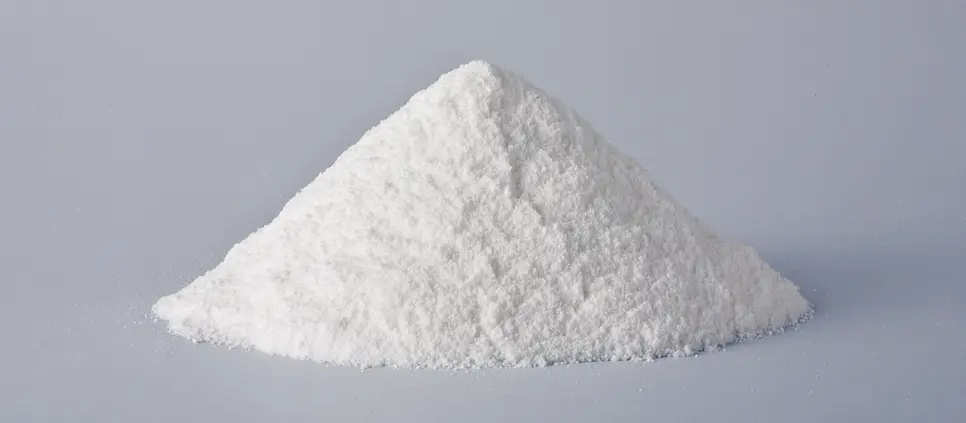
| Appearance | White fine powder |
| ZnO Content | ≥99.7% |
| Lead (Pb) | ≤0.01% |
| Specific Surface Area | 3–10 m²/g |
* Specifications are typical values. Final specification confirmed by COA per batch. Contact us for custom grades.
Available Packaging
Documentation Available
Request documentation via our quote form or directly by email.
Frequently Asked Questions
What is Zinc Oxide used for?›
What grades of Zinc Oxide are available?›
What is the minimum order quantity (MOQ) for Zinc Oxide?›
What documentation is included with Zinc Oxide?›
What packaging is available for Zinc Oxide?›
Why Buy From Us
Related Resources & Products
Explore related guides, products, and applications from Dusit Chemicals.
Request a Quote
Get pricing for Zinc Oxide — specify quantity, grade, and destination.
More in Industrial & Specialty Chemicals
Zinc Oxide Export Pricing Guide
FOB pricing — contact us for exact current quotes.
| Grade | Price Range | Notes |
|---|---|---|
| Direct Process (Rubber) | $1,500-1,800/MT | Most traded grade for rubber industry |
| Indirect Process (Premium) | $2,000-2,500/MT | Paints, coatings, ceramics |
| Pharmaceutical/Cosmetic (USP) | $2,500-3,500/MT | Sunscreen, ointments |
| Nano-grade | $5,000-8,000/MT | Transparent sunscreen, electronics |